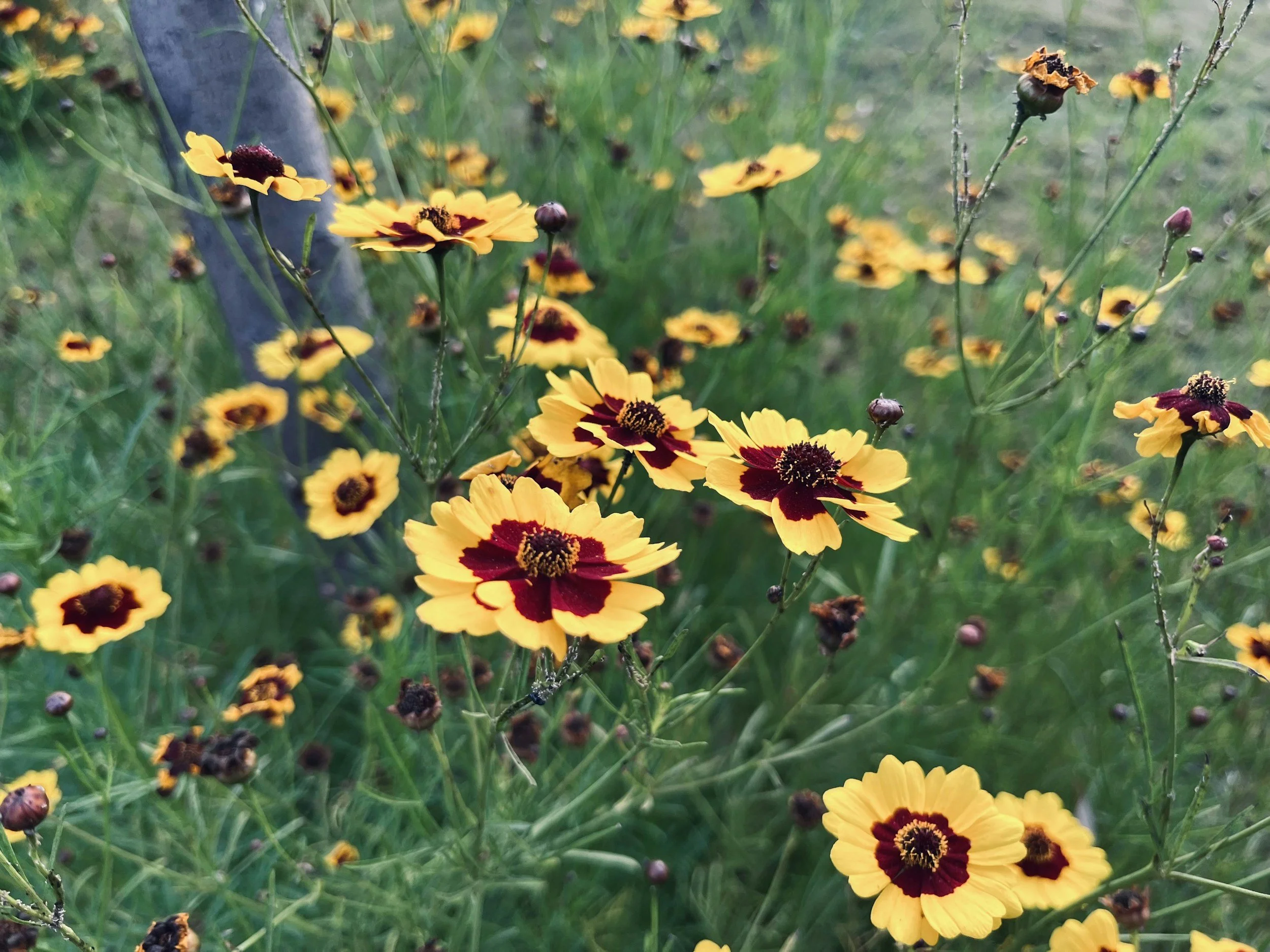
Coreopsis flowers…
Botanical Dye Plants — A Living Palette
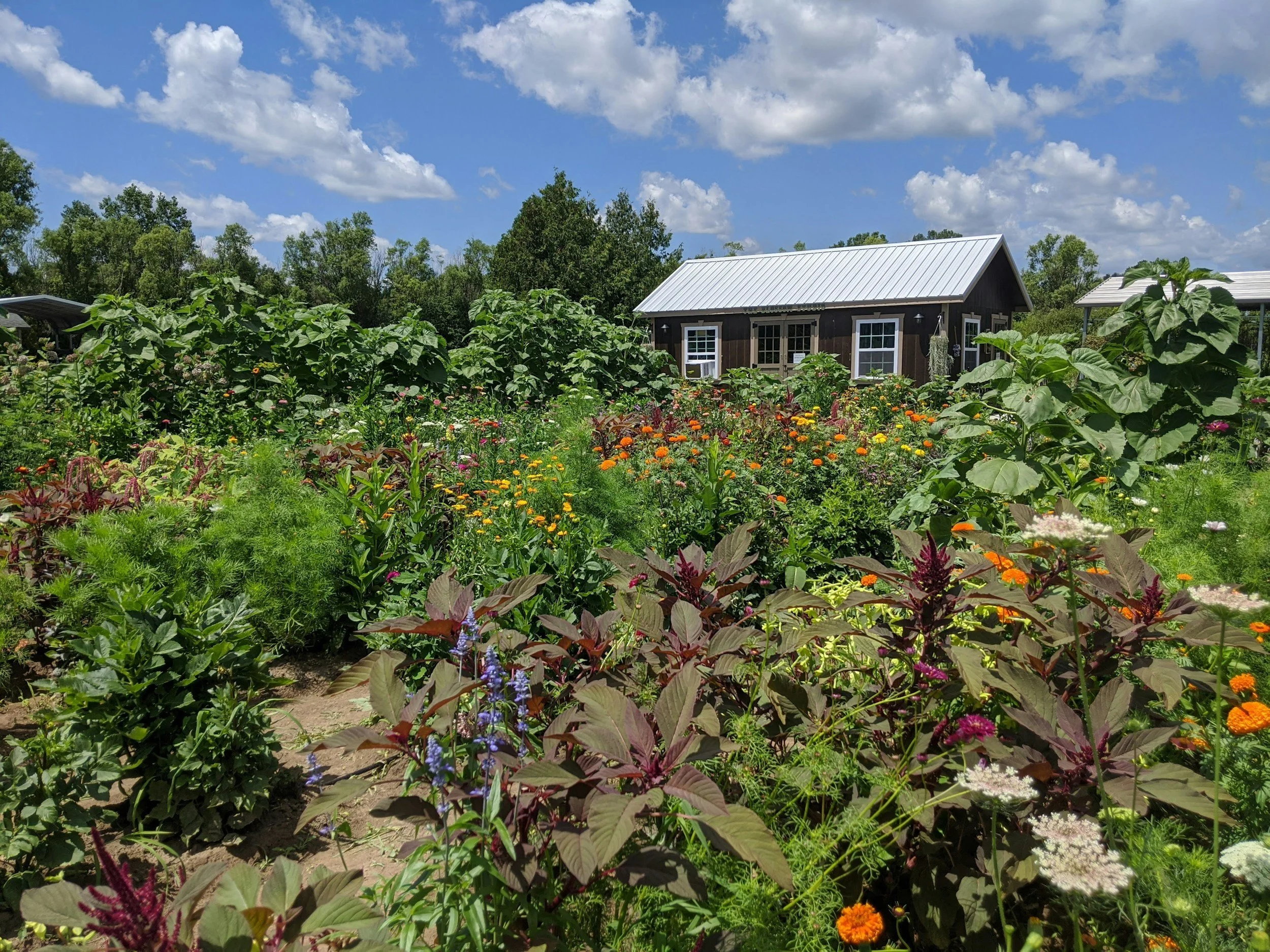
Planting a natural dye garden is an invitation to grow your own color—to step into a slower, more intimate relationship with the plants that tint, stain, and imprint our cloth. From sunlit marigolds to deep-toned hollyhocks, a dye garden becomes both a palette and a practice. Whether you’re working with a small backyard, a few raised beds, or even containers, you can cultivate a living library of botanical color—one that evolves with the seasons and deepens your connection to natural dyeing.
Below is a curated collection of plants known for their natural dye potential. Each offers its own range of color, depth, and character—shaped by season, soil, mordant, and process. For further information, refer to my book for more options.
Flowers + Garden Plants
Rose of Sharon (Hibiscus syriacus) — soft teals, aquas and blues
Hollyhock (Alcea rosea) — lavenders, charcoals, deep purples (especially darker varieties)
Black hollyhock (Alcea rosea var. nigra) — dramatic inky purples to near-black
Butterfly bush (Buddleja davidii) — subtle greens, blues and soft yellow undertones
Dahlias (Dahlia spp.) — wide tonal range: golds, olives, warm browns
Impatiens (Impatiens walleriana) — delicate pinks and soft corals
Begonias (Begonia spp.) — gentle blush tones, pale yellows
Dye Garden Staples
Hopi Black Dye Sunflower (Helianthus annuus) — seeds yield deep purples, grays, near-black tones
Marigold (Tagetes) (Tagetes spp.) — clear yellows, golds, and warm greens (distinct from calendula)
Dyer’s chamomile (Anthemis tinctoria / Cota tinctoria) — bright, sunlit yellows
Coreopsis (Coreopsis spp.) — fiery oranges, rusts, and deep reds
Sulphur cosmos (Cosmos sulphureus) — glowing oranges and golden yellows
Garden cosmos (Cosmos bipinnatus) — soft pinks and purples; beautiful for bundle dyeing and hammering
Chocolate cosmos (Cosmos atrosanguineus) — rich, earthy tones with subtle depth
Textural + Statement Blooms
Pincushion flower (Black Knight scabiosa) (Scabiosa atropurpurea) — moody violets, smoky blues, near-black accents
Indigo + Specialty Dye Plants
Japanese indigo (Persicaria tinctoria) — true blues; also yields fresh green prints with techniques like eco-printing and fresh leaf natural dyeing
Natural Dye Garden Planting Calendar (By Zone)
When to sow, plant, and harvest your botanical color
Zones 3–5 (Short Growing Season | Cold Climate)
Last frost: late May – early June
Start Indoors (March–April)
Coreopsis (Coreopsis spp.)
Dyer’s chamomile (Anthemis tinctoria)
Marigold (Tagetes spp.)
Hollyhock (Alcea rosea)
Direct Sow / Transplant (Late May–June)
Cosmos (Cosmos bipinnatus, C. sulphureus)
Sunflowers (Helianthus annuus, including Hopi Black Dye)
Scabiosa (Scabiosa atropurpurea)
Best Harvest Window
July – September
Notes
Focus on fast-growing annuals
Use row covers early in the season
Zones 6–7 (Moderate Seasons)
Last frost: April–May
Start Indoors (February–March)
Marigold (Tagetes spp.)
Coreopsis (Coreopsis spp.)
Dyer’s chamomile (Anthemis tinctoria)
Direct Sow (April–May)
Cosmos varieties
Sunflowers
Scabiosa
Perennials / Biennials
Hollyhock (Alcea rosea)
Butterfly bush (Buddleja davidii)
Best Harvest Window
June – October
Notes
Succession sow cosmos + marigolds for continuous color
Ideal zones for a full dye garden palette
Zones 8–9 (Long Growing Season | Mild Winters)
Last frost: February–March
Start Indoors (January–February)
Marigold
Coreopsis
Direct Sow (February–April)
Cosmos
Sunflowers
Chamomile
Fall Planting (September–October)
Hollyhock
Dyer’s chamomile
Best Harvest Window
April – November
Notes
Can grow nearly year-round
Watch for heat stress—harvest early morning
Zone 10+ (Warm / Tropical Climates)
Minimal frost
Planting Windows
Fall–Winter (October–January): best for most dye plants
Avoid peak summer heat for delicate varieties
Best Plants
Marigold (Tagetes spp.)
Cosmos (Cosmos spp.)
Indigo (Persicaria tinctoria)
Hibiscus (Hibiscus spp., including Rose of Sharon in milder areas)
Best Harvest Window
Nearly year-round (peak in spring + early summer)
Notes
Provide partial shade for sensitive plants
Indigo thrives in warmth and humidity
Quick Planting Reference (High-Performing Dye Plants)
Marigold (Tagetes spp.) — easy, prolific, season-long color
Coreopsis (Coreopsis spp.) — bold oranges + reds
Cosmos (Cosmos spp.) — excellent for bundle dye + printing
Hollyhock (Alcea rosea) — dramatic purples + blacks
Sunflower (Helianthus annuus) — strong dye potential, especially Hopi varieties
Japanese indigo (Persicaria tinctoria) — true blue (warm climates preferred)
If you’re ready to take this further, the Flora Obscura Atelier IS LIVE—join us to learn botanical CONTACT printing, natural dyeing, and create your own wearable textiles.
Save with the Full Atelier bundle. The Atelier is designed to be spacious, flexible, and deeply immersive—offering a steady, supportive rhythm for those ready to fully step into botanical printing and garment-making. Over five months, you’ll move through the process with intention, creating a collection of pieces crafted by your own hands.
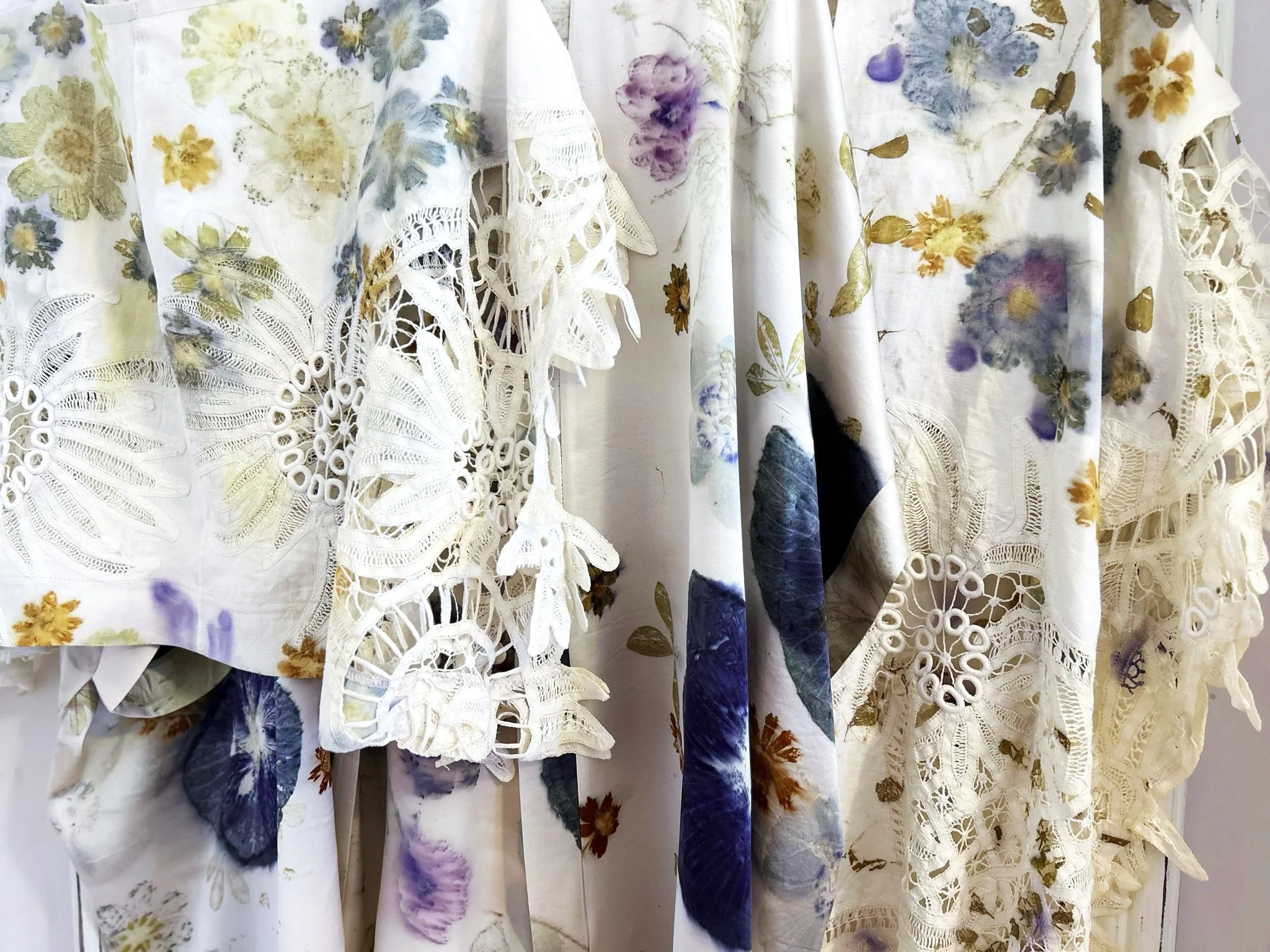
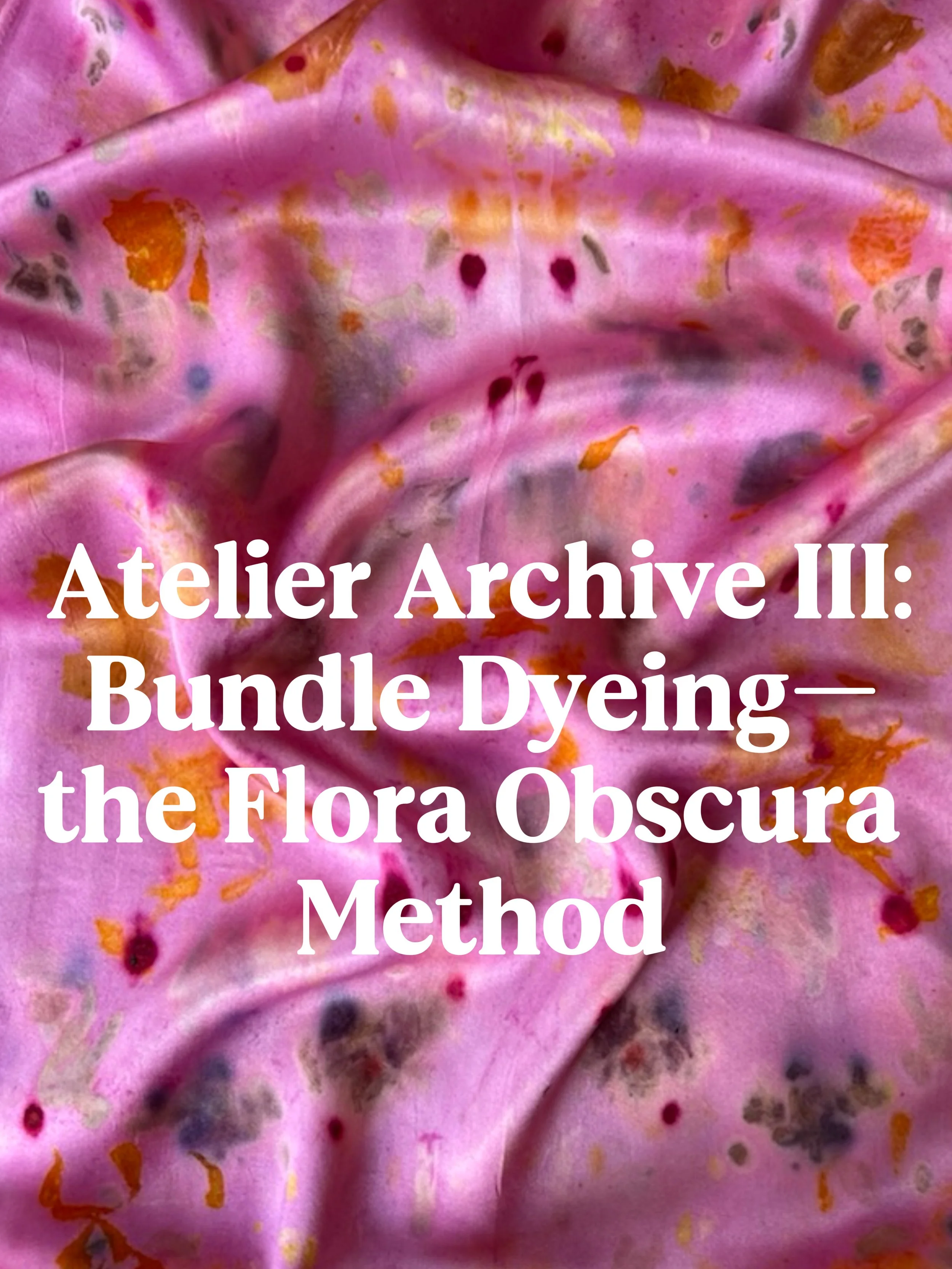
Atelier Archive III: Bundle Dyeing— The Flora Obscura Method
Discover the magic of bundle dyeing as flowers and leaves imprint their color and form directly onto fabric. In this video workshop, you'll learn the Flora Obscura method for creating richly layered botanical textiles using fresh and dried botanicals, natural fibers, and steam.
No sewing is required. Simply arrive with a length of fabric and a curiosity for the natural world.
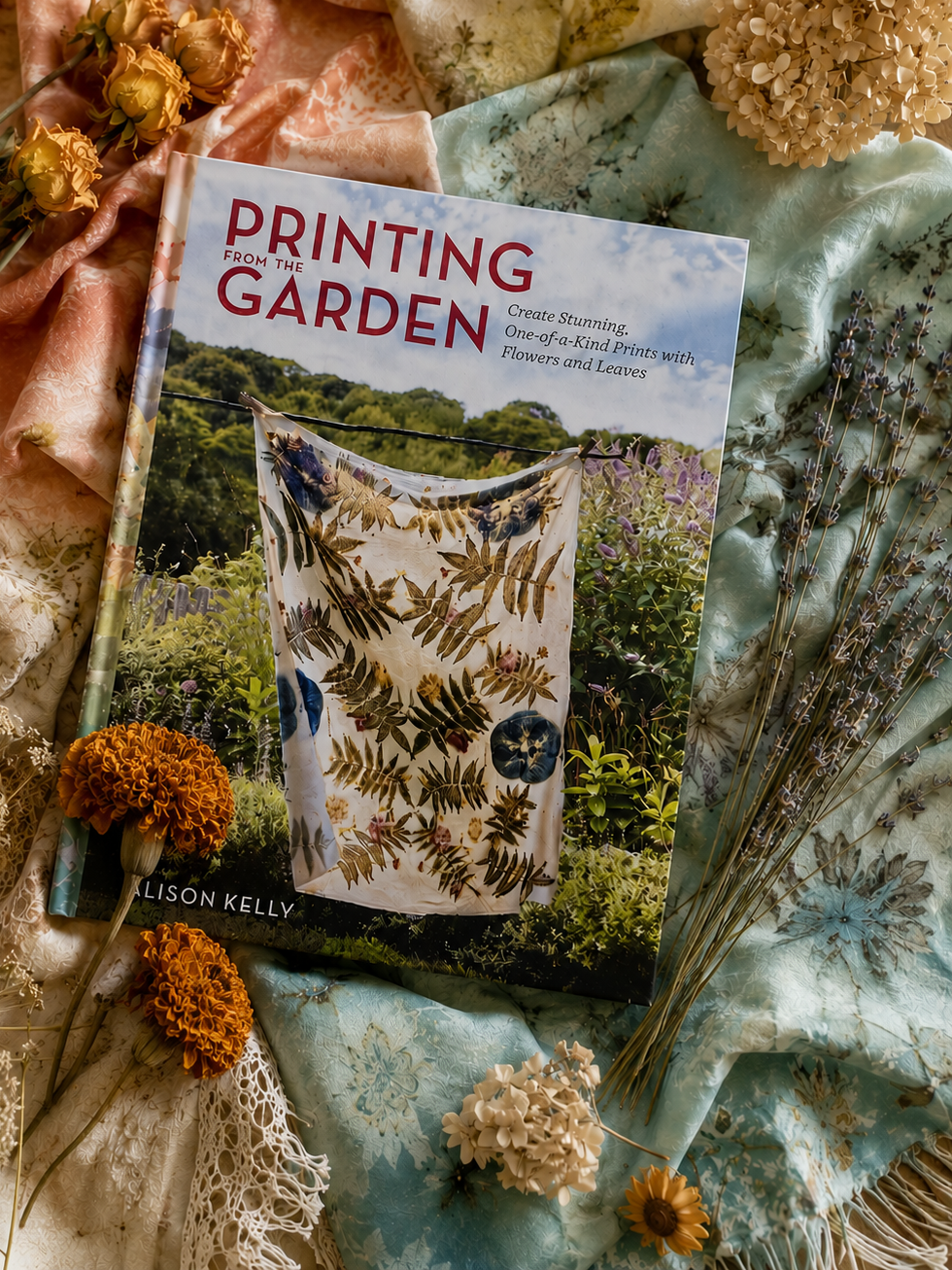
It was a dream come true to be invited to create a botanical printing book with Hachette/Storey publishing— Printing from the Garden is my love song to the mesmerizing artform of eco-printing and natural dye works created on fabric and paper. Learn all of my recipes, techniques and must-have tips for creating your own stunning library of botanical artworks.