
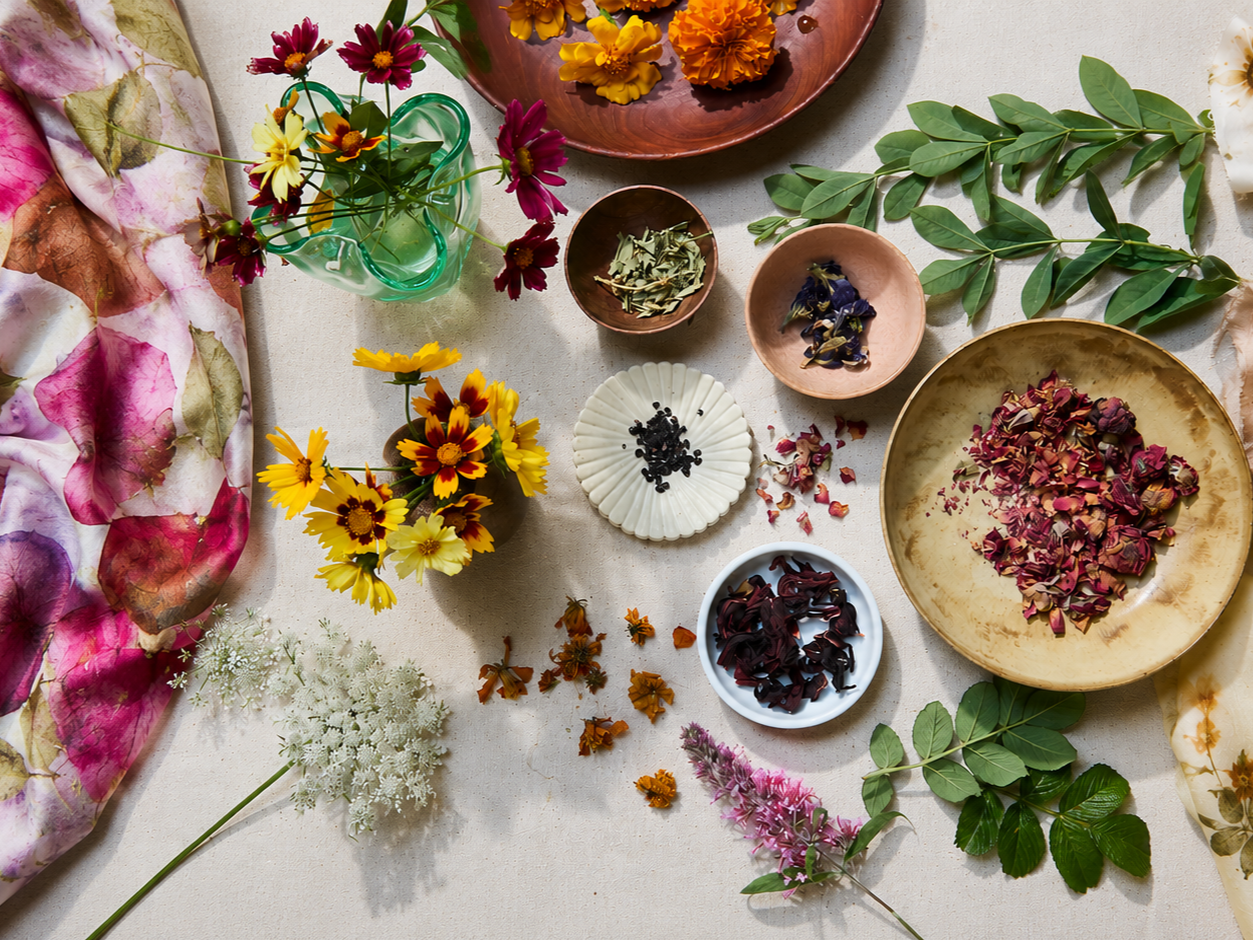
WELCOME TO BUNDLE DYEING— THE FLORA OBSCURA METHOD
Bundle dyeing is one of the simplest and most enchanting ways to capture the colors and forms of the garden on cloth. Using fresh and dried flowers, leaves, bark, and other botanicals, we arrange plants directly onto fabric, then fold, bundle, and steam them to reveal delicate prints and unexpected color.
The Flora Obscura Method embraces both intention and surprise. Rather than striving for perfect replication, we work in partnership with plants, allowing their pigments, shapes, and natural chemistry to leave their unique mark. Fresh flowers often create bold, vibrant impressions, while dried botanicals contribute subtle tones, texture, and depth.
NATURAL DYE FOUNDATIONS: PREPARING FABRIC FOR DYEING & PRINTING
ALWAYS WEIGH YOUR FABRIC DRY PRIOR TO BEGINNING THE PREPARATION PROCESS:
Weight of Fiber (WOF) is the dry weight of the fabric or fiber being dyed. In natural dyeing, dye materials and mordants are often measured as a percentage of the WOF to ensure consistent and repeatable results.
For example, if you have 100g of silk and a recipe calls for 15% WOF alum, you would use 15g of alum.
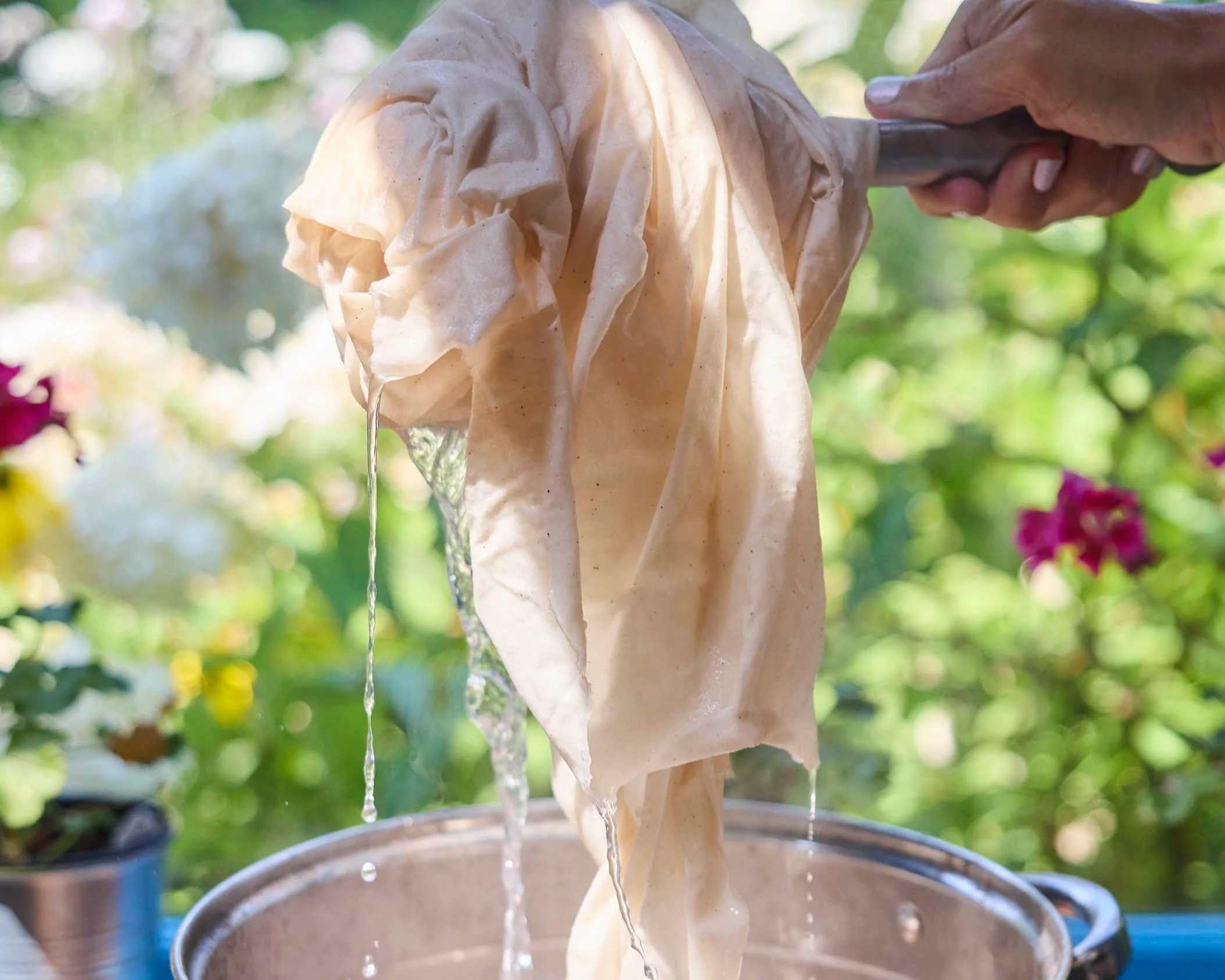
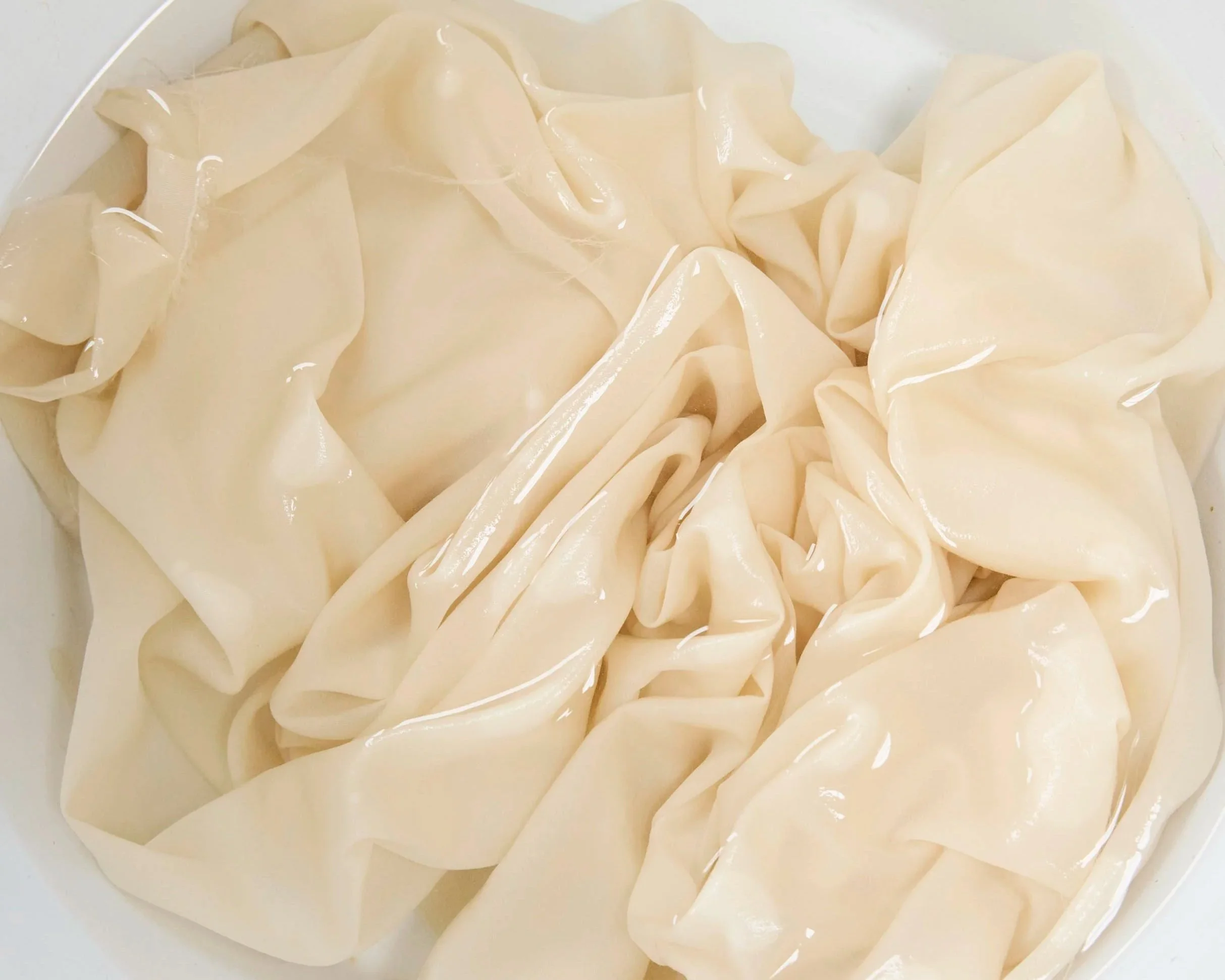
STEP 1— WET OUT THE FIBER
Wetting Out The Fiber
Fill a basin or pot with warm water.
Add a squirt of plant-based soap and stir.
Submerge the fiber and gently agitate to ensure it is fully saturated.
Soak for 30-60 minutes.
Rinse thoroughly in clean water.
The silk is now evenly wetted, and ready for scouring.
STEP 2— SCOUR THE FIBER
Scouring Cotton
Fill a non-reactive pot with enough water for the fabric to move freely.
Add Liquid Scour, Orvus paste soap, Synthrapol or Neutral Detergent at 5.5% WOF (approximately 5.5g or 1 tsp per 100g fabric).
Add Soda Ash (Sodium Carbonate) at 1–2% WOF (approximately 1–2g or ¼–½ tsp per 100g fabric).
Add the pre-wetted cotton and stir well.
Heat to a gentle simmer (180–200°F / 82–93°C) and maintain for 60 minutes, stirring occasionally.
Allow to cool, then rinse thoroughly until the water runs clear.
The cotton is now clean and ready for mordanting or dyeing.
A Note on Scouring Silk and Wool
Many silk fabrics are sold as PFD (Prepared for Dyeing), meaning they have already been thoroughly cleaned and processed to accept dye. If your silk is labeled PFD, additional scouring is often unnecessary.
In fact, I frequently skip scouring silk altogether, especially when working with high-quality silk yardage or scarves intended for botanical printing and natural dyeing. Excessive washing can gradually diminish the fiber's natural luster and softness, so I prefer to handle silk as gently as possible.
The same philosophy applies to silk/wool blends— I personally do not dye wool yarn. A light scour may be beneficial for particularly dirty or heavily processed wool, though repeated scouring can strip away some of the fiber's natural character.
What You'll Need TO SCOUR:
Silk or wool fabric or yarn
A non-pH-neutral detergent formulated for delicate fibers, such as Synthrapol, olive oil soap or a mild textile soap
Large non-reactive pot or basin
Warm water
Spoon or tongs for gentle stirring
Scouring Silk
Fill a non-reactive pot or basin with warm water (approximately 100–120°F / 38–49°C).
Add a small amount of mild detergent and stir to dissolve.
Submerge the silk and gently move it through the water.
Allow it to soak for 30–60 minutes.
Avoid vigorous stirring, wringing, or sudden temperature changes, which can damage delicate silk fibers.
Rinse thoroughly in water of a similar temperature until the water runs clear.
Gently squeeze out excess water and allow to air dry or proceed directly to mordanting.
Scouring Wool
Fill a pot or basin with warm water (approximately 100–120°F / 38–49°C).
Add a small amount of olive oil soap or a very mild detergent suitable for protein fibers.
Carefully submerge the wool, ensuring it is completely saturated.
Allow it to soak for 30–60 minutes.
Avoid agitation, rubbing, or rapid temperature changes, as these can cause felting.
Drain the water and rinse gently using water at a similar temperature.
Repeat if necessary until the rinse water is clear.
STEP 3— MORDANT THE FIBER
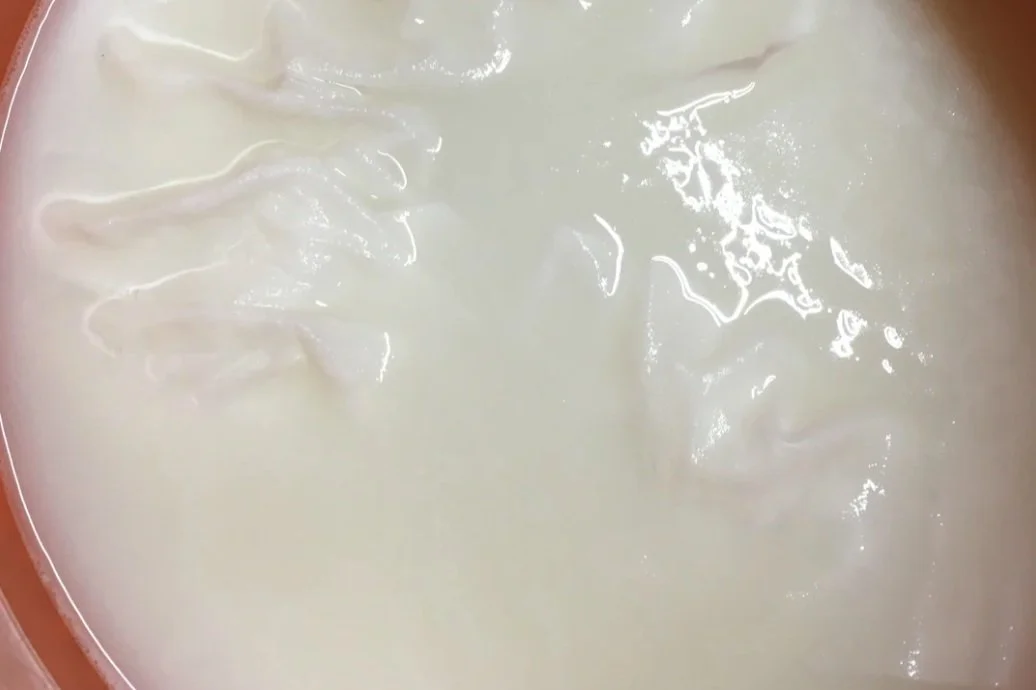
Mordanting Protein & Cellulose with PAS (Potassium Aluminum Sulfate)
Weigh your fabric dry (example: 100g).
Calculate 15% WOF PAS: 15g PAS.
Dissolve the PAS in warm water in a small vessel and stir until dissolved.
Add the solution to a non-reactive pot with enough water for the silk to move freely.
Add the pre-wetted/scoured fabric.
Slowly heat to 180°F (82°C) and maintain for 1 hour.
Allow the fabric to cool in the mordant bath.
Rinse and hang to dry fully or proceed directly to dyeing.
Mordanting Protein & Cellulose with Aluminum Triformate
Weigh your dry fabric.
Calculate 5-10% Aluminum Triformate (ATF) WOF (5g-10g ATF per 100g fabric).
Dissolve the ATF in warm (not hot) water, stir until mixed, and add to a non-reactive container with enough water for the fabric to move freely.
Add pre-scoured, wet fiber and stir well.
Soak at room temperature for 8–24 hours, stirring occasionally.
Remove the fabric and allow it to dry completely.
Cure for at least 24 hours before dyeing or printing.
Recipe: Per 100g cotton, use 5g-10g Aluminum Triformate. The fabric is ready for natural dyeing once dry and cured.
Mordanting Cellulose with Aluminum Acetate
Weigh your dry fabric.
Calculate 5-10% Aluminum Acetate WOF (5g-10g aluminum acetate per 100g fabric).
Dissolve the aluminum acetate in hot tap water and add to a non-reactive container with enough water for the fabric to move freely.
Add pre-scoured, wet cellulose fibers (cotton, linen, hemp, etc.).
Rotate goods occasionally and allow to soak for 2 hours to overnight.
Remove the fabric and gently squeeze out excess liquid.
Allow the fabric to dry completely.
Cure for 24 hours before dyeing or eco-printing.
Step 2: Fixing Cellulose Fibers in Calcium Carbonate
Weigh your dry fabric.
Calculate 5% Calcium Carbonate WOF (5g calcium carbonate per 100g fiber), or approximately 1 rounded teaspoon per 100g fiber.
Dissolve the calcium carbonate in warm water and add enough water for the fabric to move freely.
Add the mordanted fabric and soak for 15–30 minutes, stirring occasionally.
Remove the fabric and rinse lightly if desired.
Allow the fabric to dry before dyeing or eco-printing.
Fixing the Mordant Batch Recipe: Per 100g fiber, use 5g calcium carbonate (approximately 1 rounded teaspoon). This fixing step helps prepare aluminum acetate–mordanted cellulose fibers for natural dyeing and eco-printing.
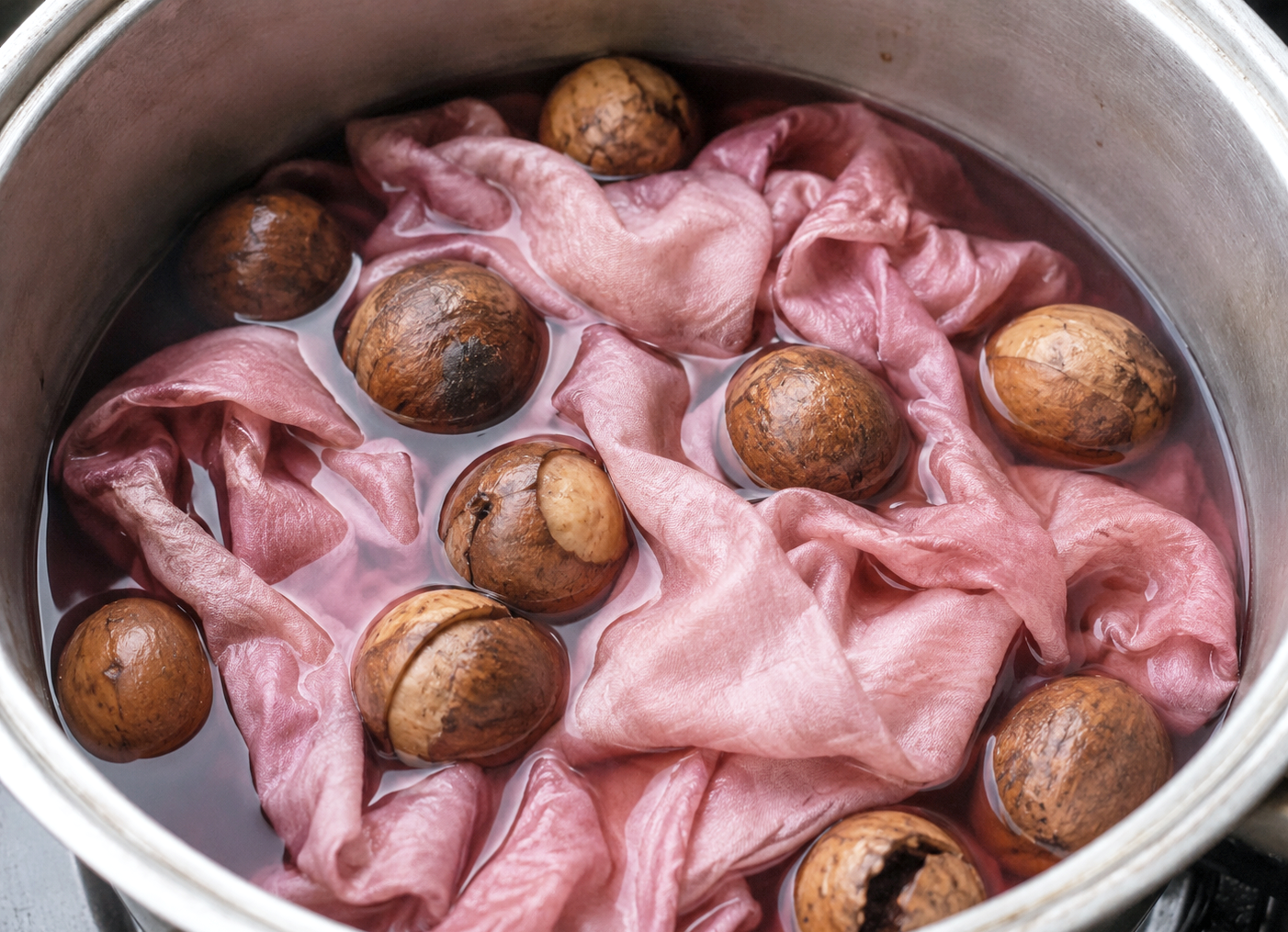
STEP 4— PREPARE DYE BATH
AVOCADO PITS MAKE FOR A WARM AND ROSY PINK DYE
Optional— Preparing a Dye Bath to imbue your fabric with a background color prior to bundle dyeing.
Natural dyes are typically measured as a percentage of the Weight of Fiber (WOF). The amount of dyestuff needed varies depending on the plant material and its concentration. Always follow the manufacturers recommendations.
As a general guideline:
Raw dyestuffs (such as dried flowers, leaves, bark, roots, and wood chips) are often used at 100% WOF. For example, 100g of fiber would require 100g of dyestuff.
Powdered dyestuffs are more concentrated and are typically used at lower percentages, often between 25–50% WOF.
Extracts are highly concentrated and usually require only 1–10% WOF.
Cochineal is exceptionally strong and is commonly used at 3–8% WOF, rather than 100%.
To prepare the dye bath:
Weigh the dyestuff according to the desired percentage of WOF.
Cover the dyestuff with water and simmer gently for 30–60 minutes to extract the color.
Strain out the plant material if desired.
Add enough water to allow the fabric to move freely in the dye bath.
Add the mordanted fiber and dye according to the specific dyestuff instructions.
Always record your WOF percentages and results for future reference and repeatability.
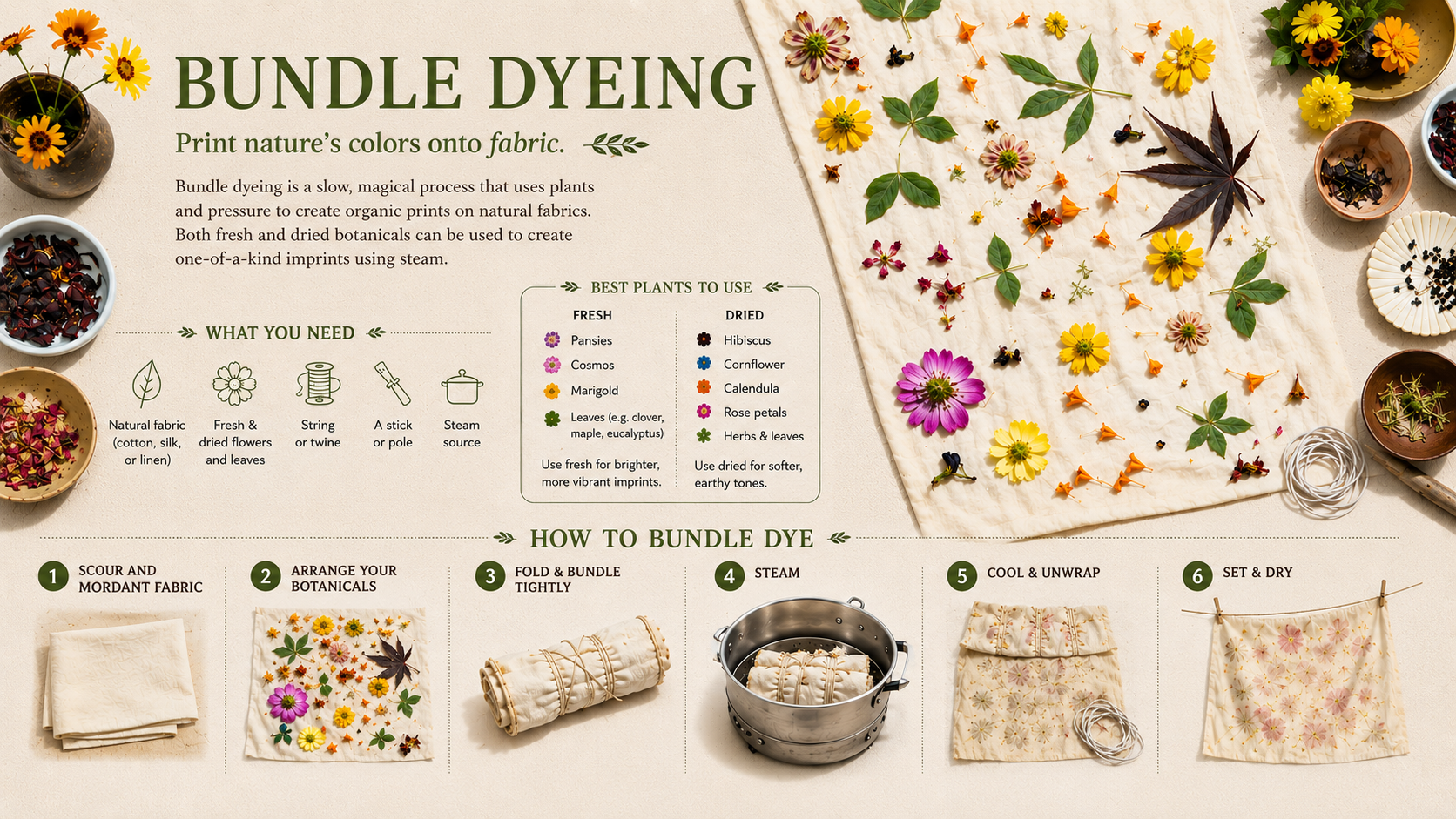
STEP 1: WET OUT & SCOUR THE FABRIC FOR DYEING
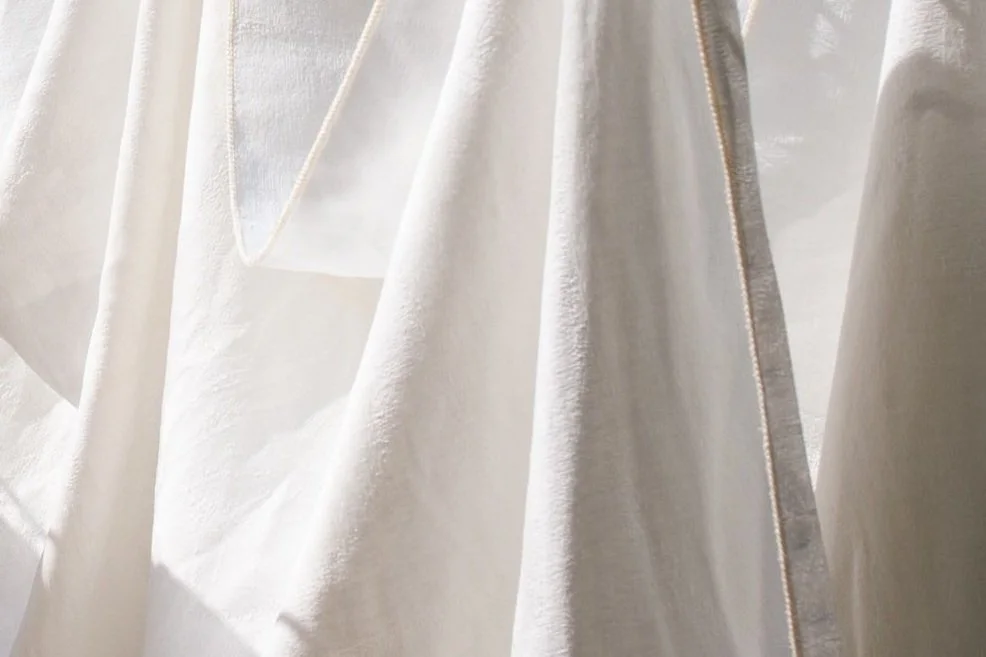
STEP 2: MORDANT YOUR FABRIC ACCORDING TO FABRIC TYPE AND MORDANT RECIPE YOU WISH TO FOLLOW

STEP 3: PREPARE DYEBATH ACCORDING TO MANUFACTURERS INSTRUCTIONS AND PROCESS THE MORDANTED FABRIC
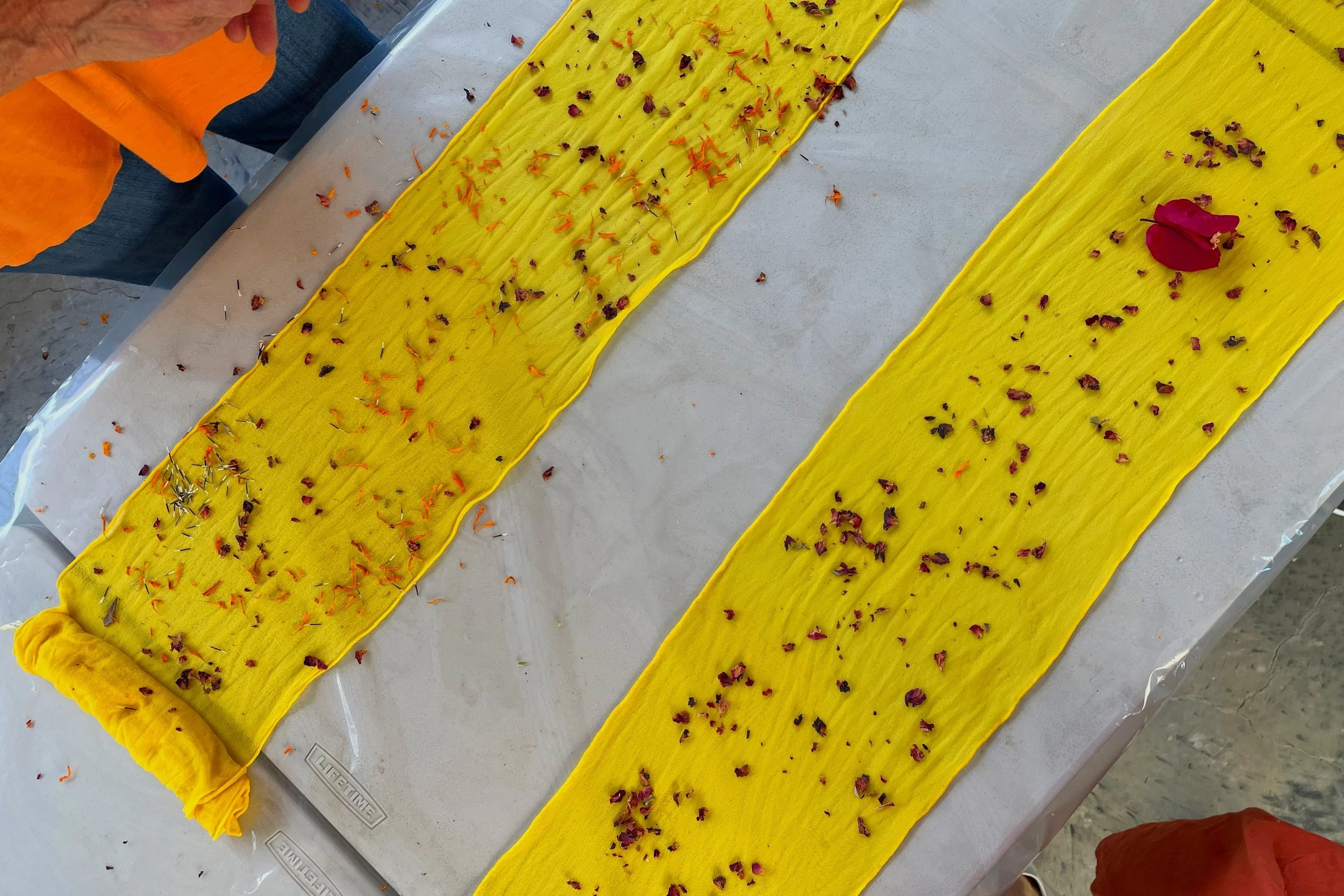
STEP 4: COOL & RINSE FABRIC FROM DYE BATH. LAY OUT DAMP AND DECORATE WITH CHOSEN FLORA--FRESH OR DIRED, OR BOTH.
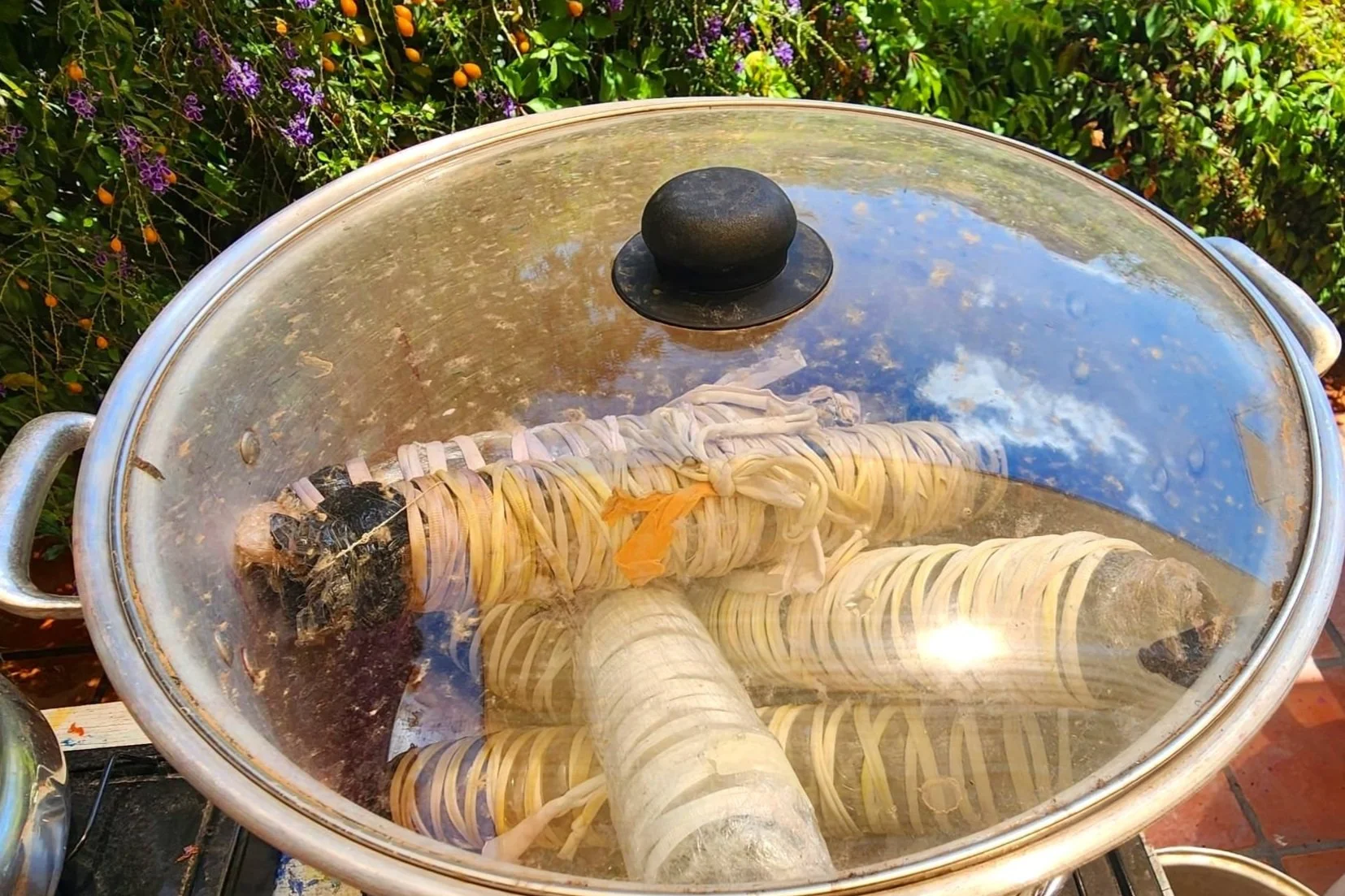
STEP 5: BUNDLE & STEAM YOUR FABRIC FOR 45-90 MINUTES DEPENDING ON THE DYESTUFF (EUCALYPTUS NEEDS 90 MINS).
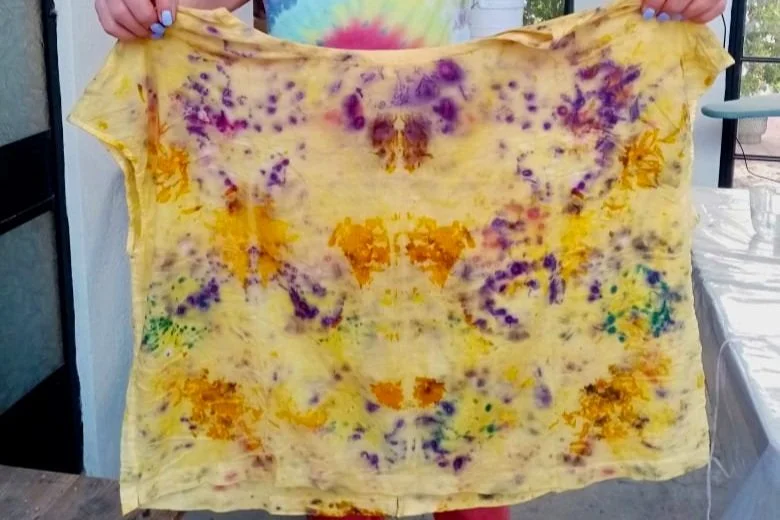
STEP 6: ONCE COOLED, OPEN UP AND REVEL IN THE COLORS! HANG TO DRY, PRESS INSIDE OUT WITH AN IRON & STEAM.
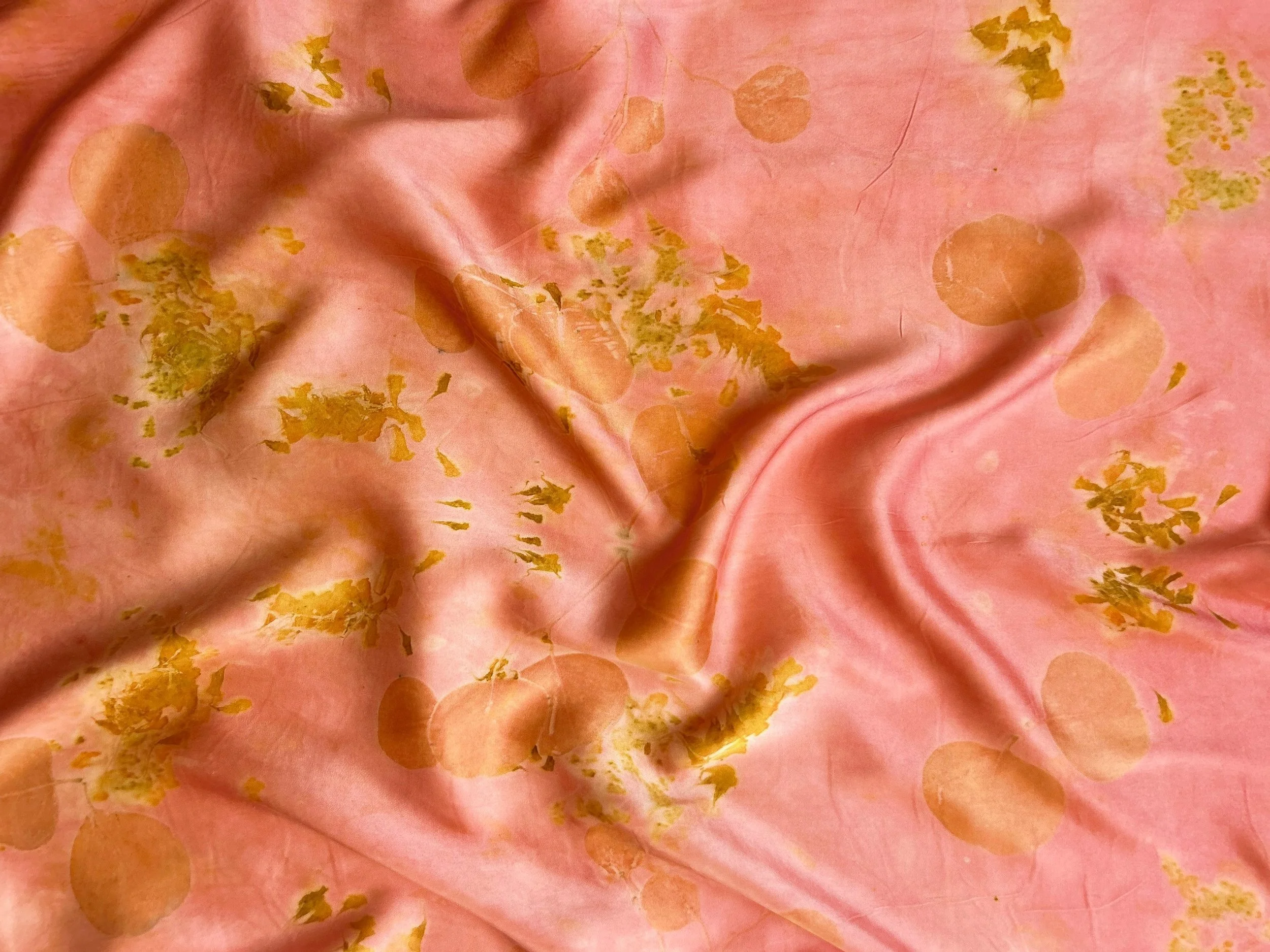
SEE BELOW FOR STEPS
TO MAKE THIS PRINT
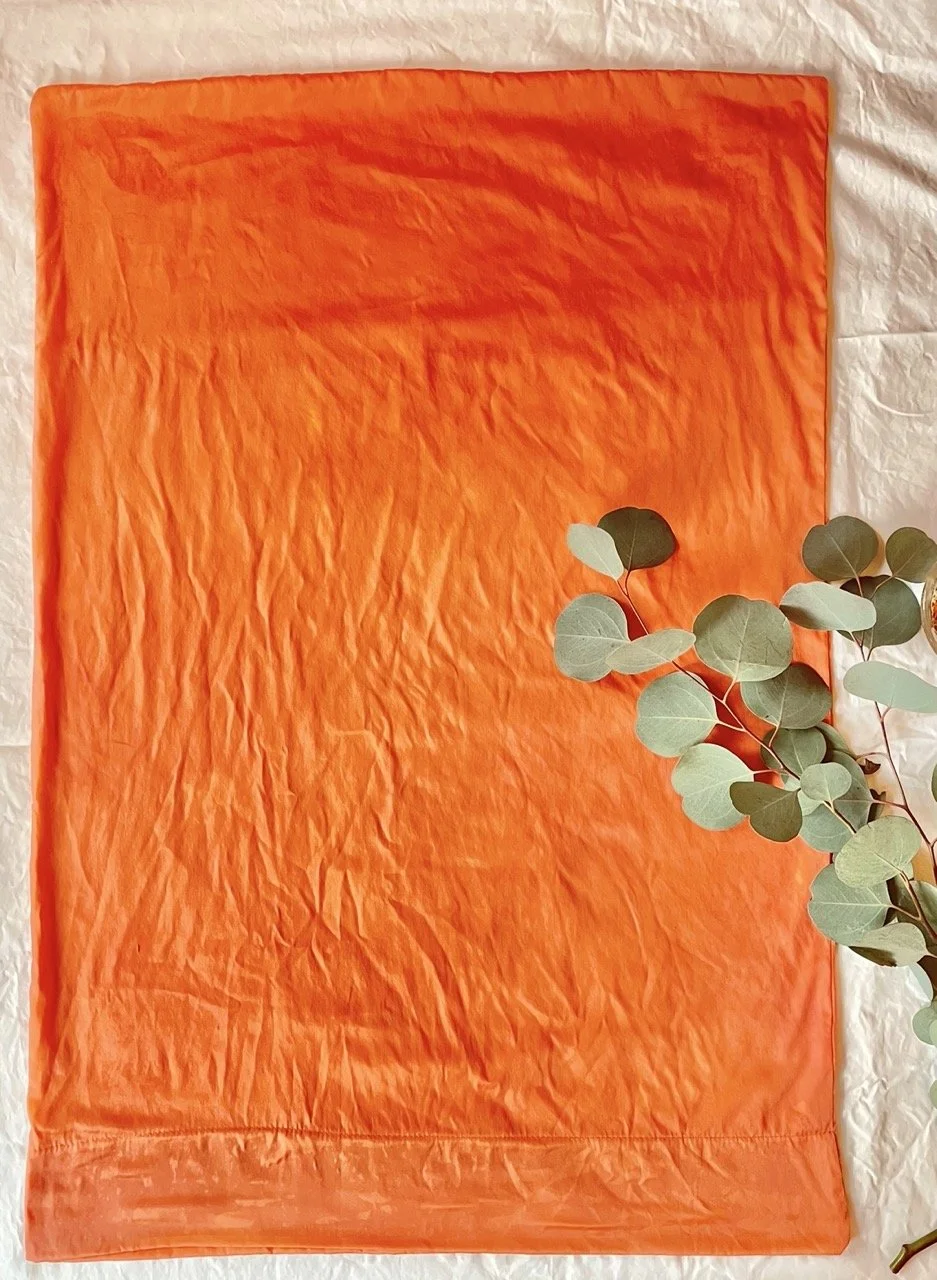
1. This silk has been mordanted in the Aluminum triformate mordant and dyed in madder root extract.
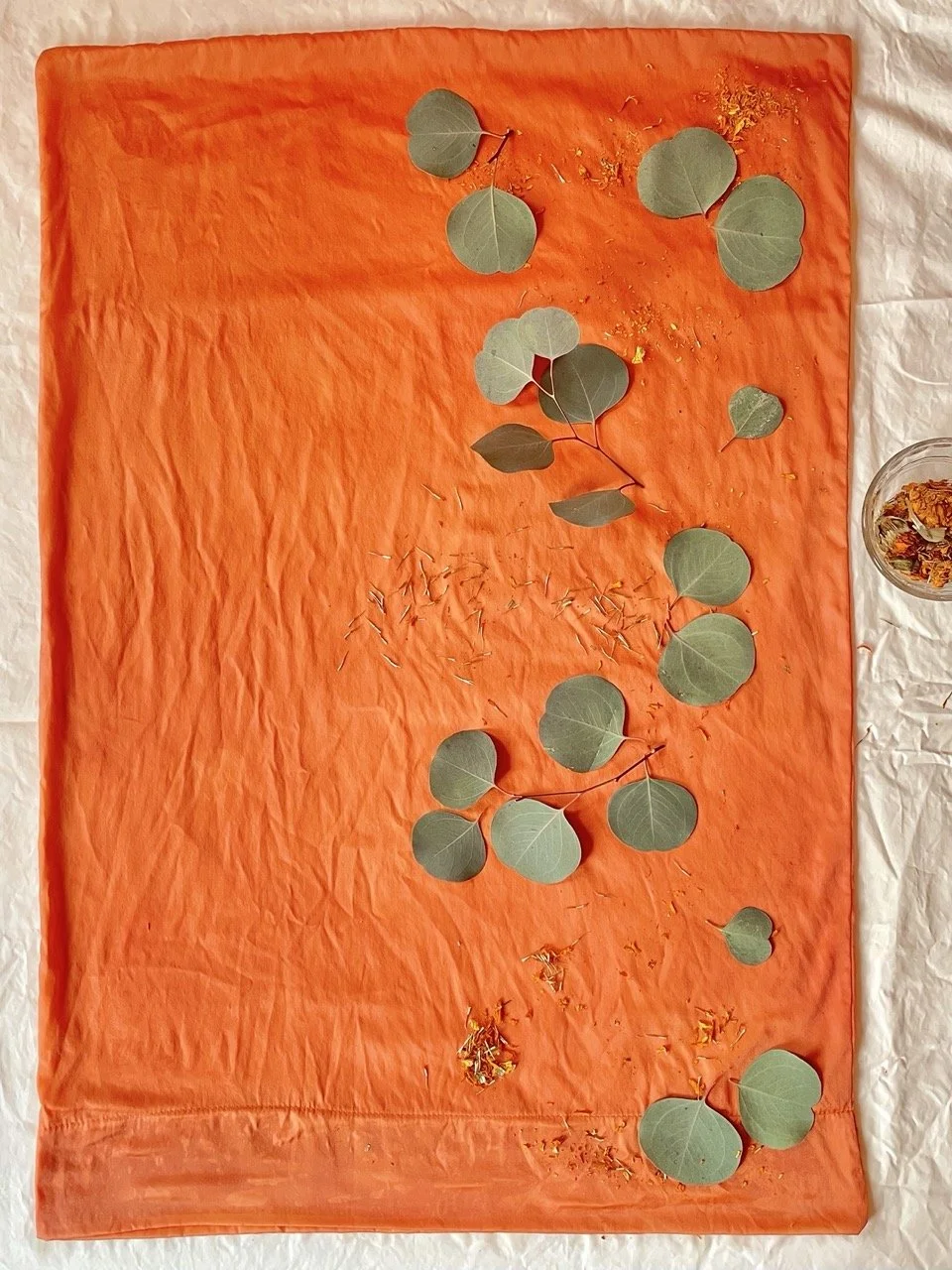
2. To create a mirror image, decorate one side, as we will fold the opposite side on top.
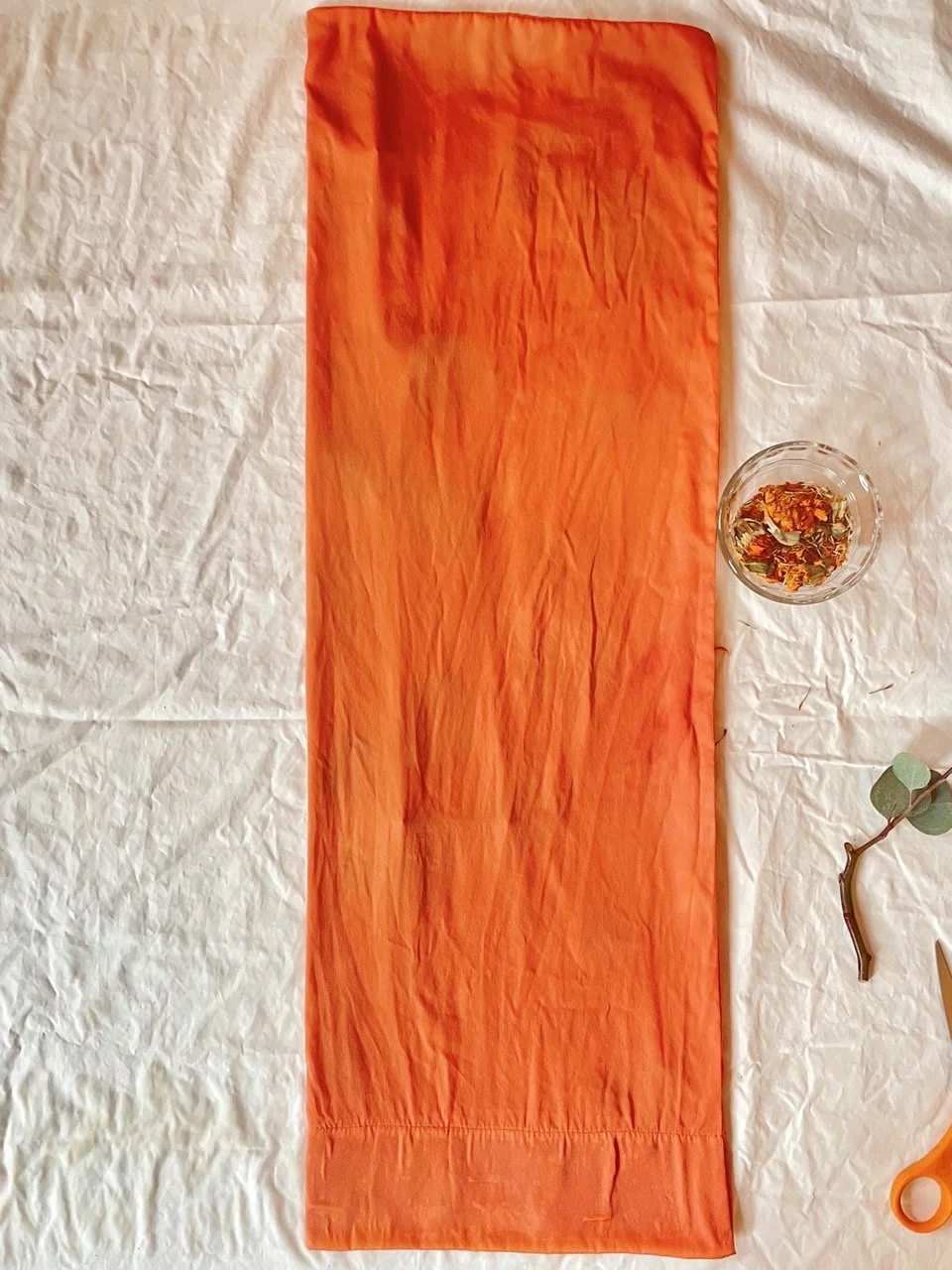
3. Fold fabric in half lengthwise. Place a few leaves or flowers.
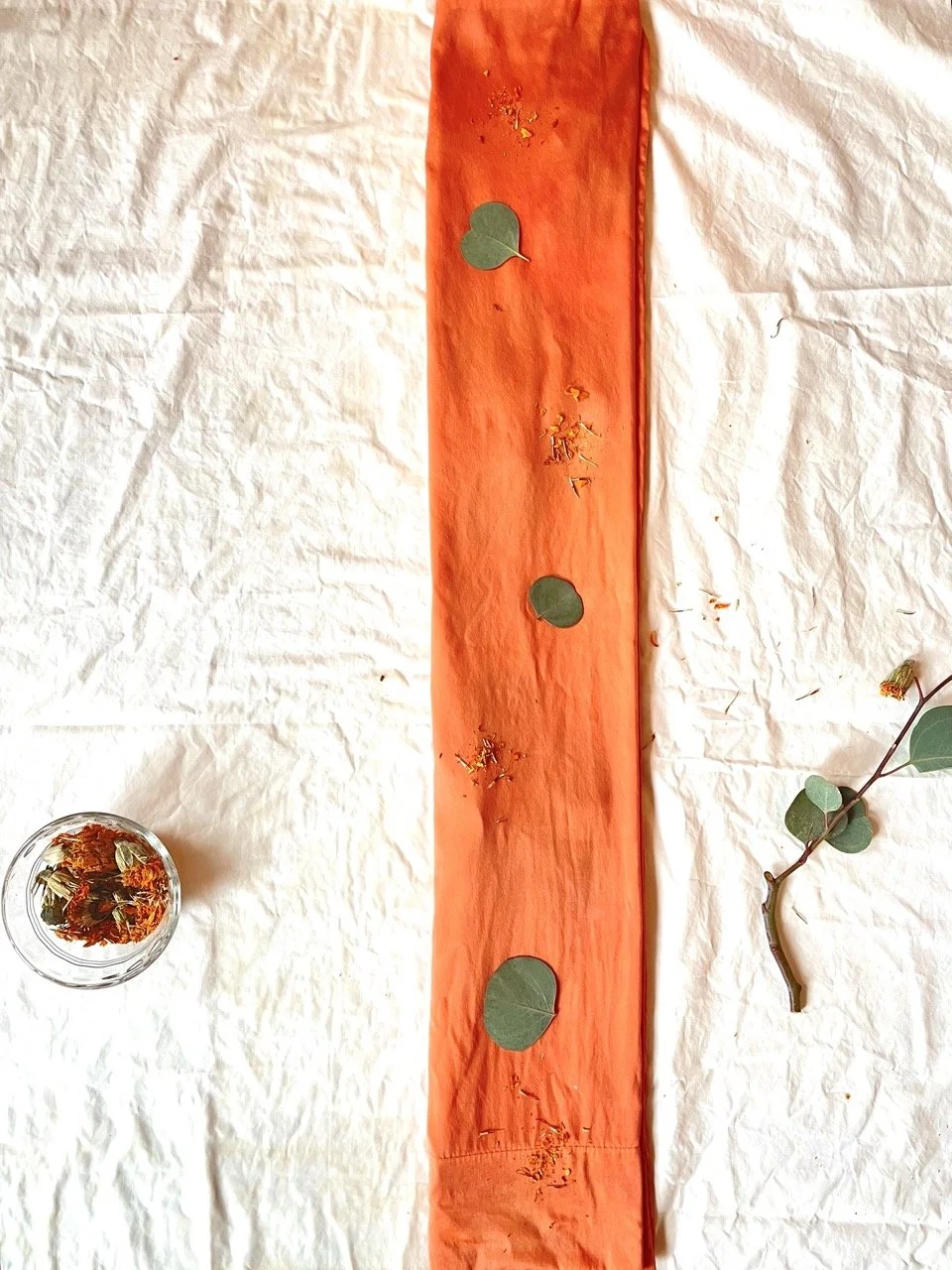
4. Fold again and place a few leaves or flowers. By folding without a barrier, we are creating slight repeats or bleeds on the horizontal.
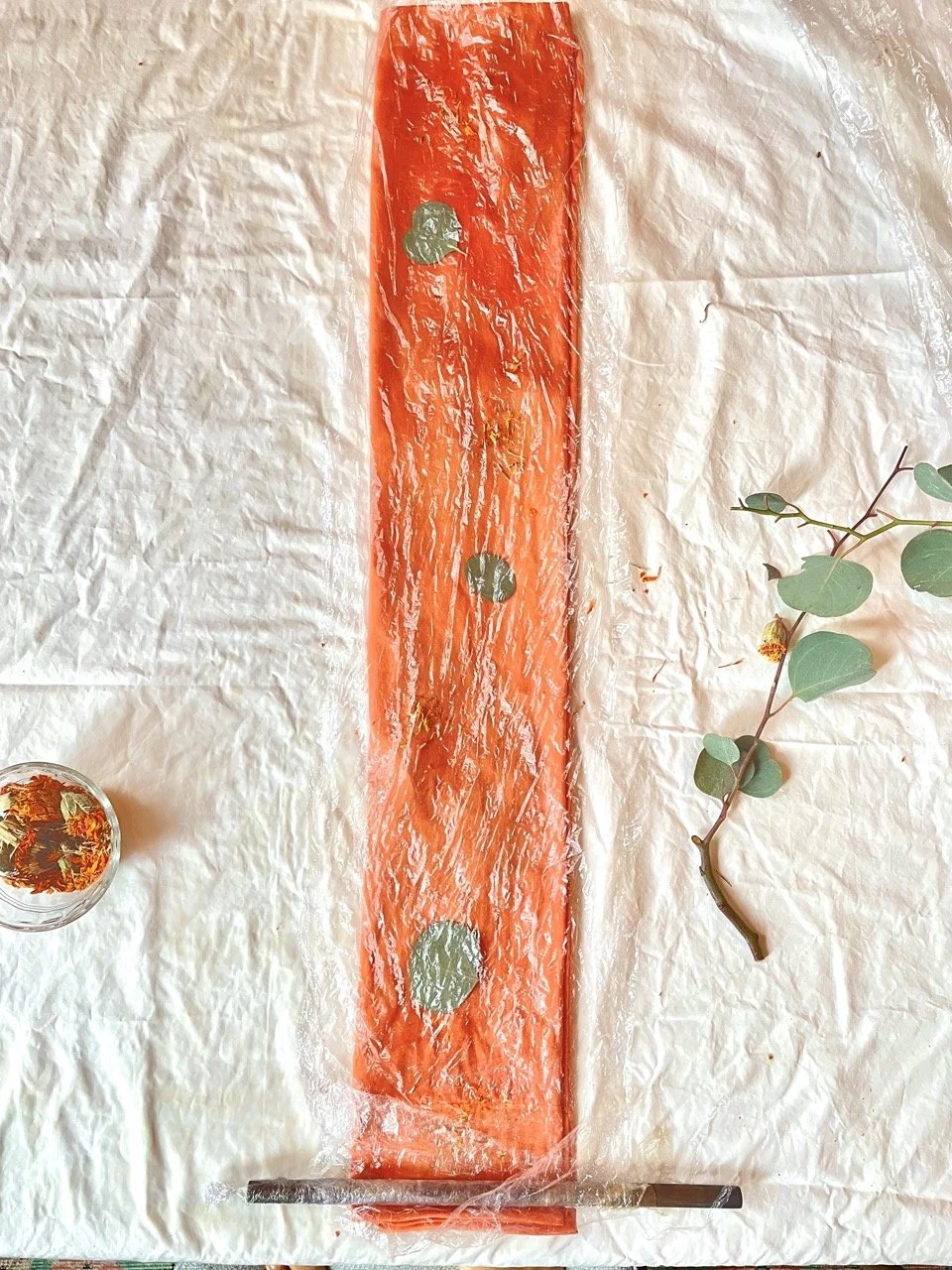
5. Optional: Cover with a barrier. Roll fabric arund a dowel, compressing as you go.

6. Tie tightly: starting from the middle and working out to either side, and place in the steamer for the allotted time.
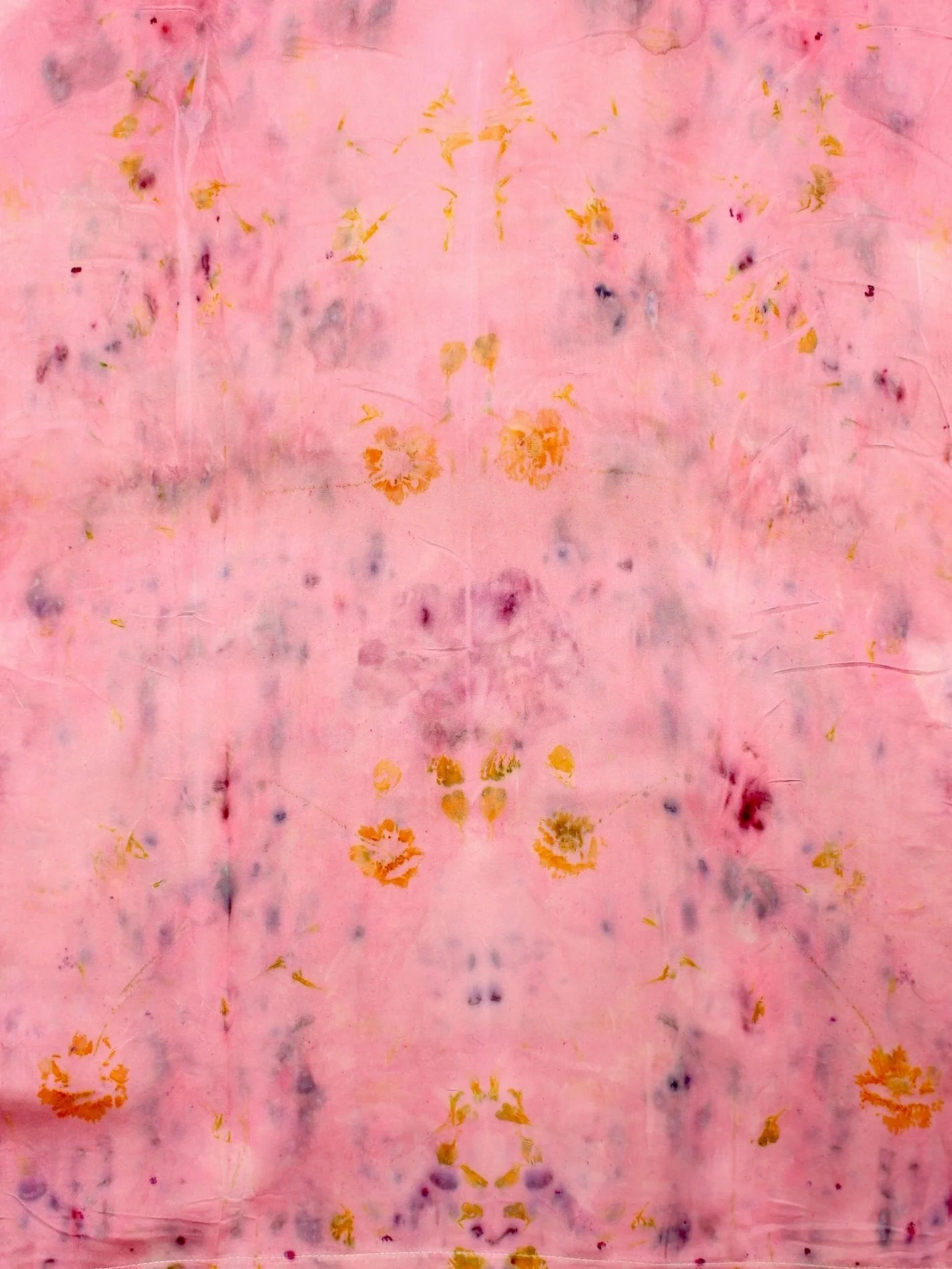
Alum mordant, quebracho dye, bundle dye with fresh and dried flowers.
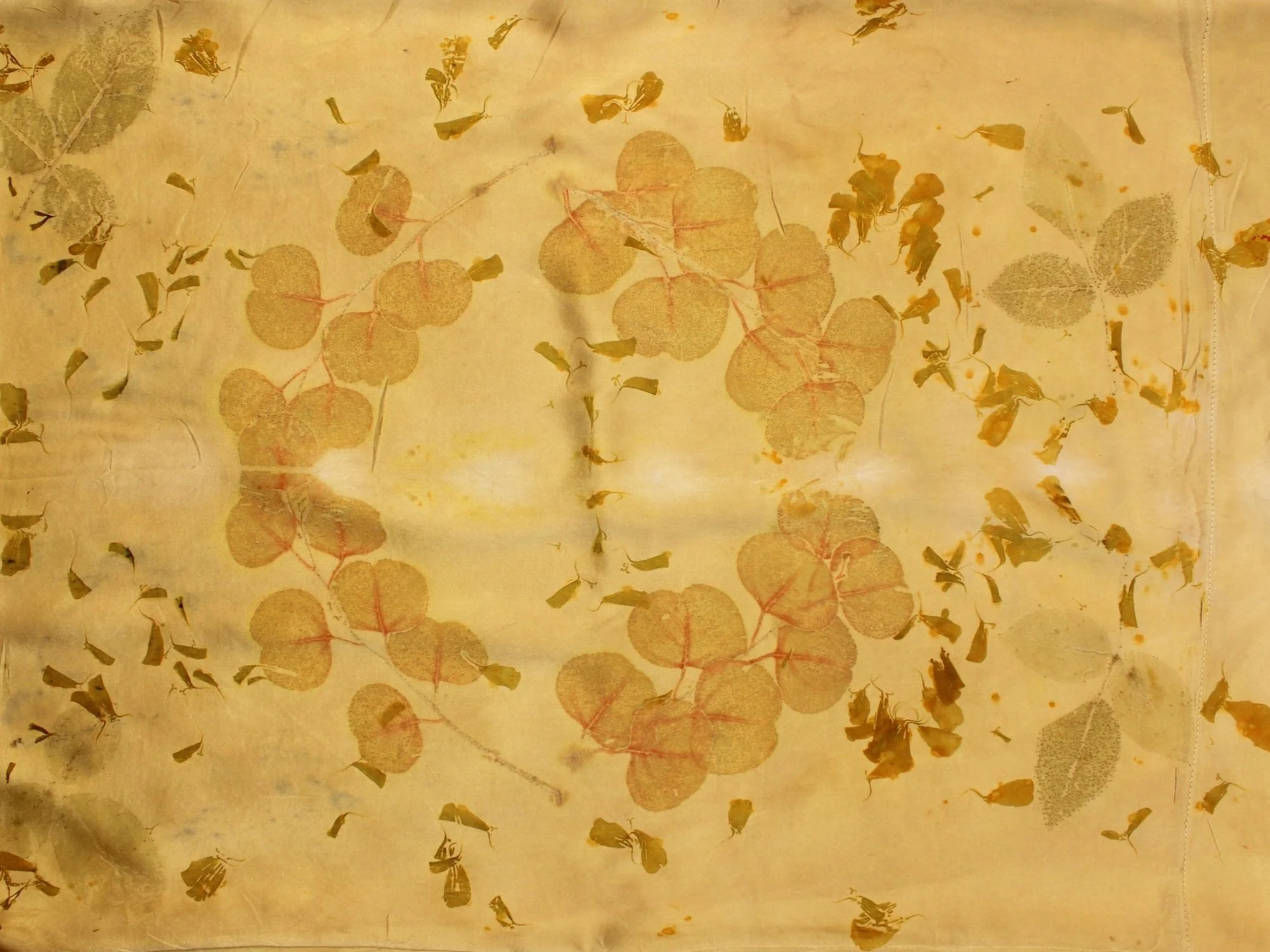
Alum mordant, kamala dye, bundle dye with fresh eucalyptus & marigolds.
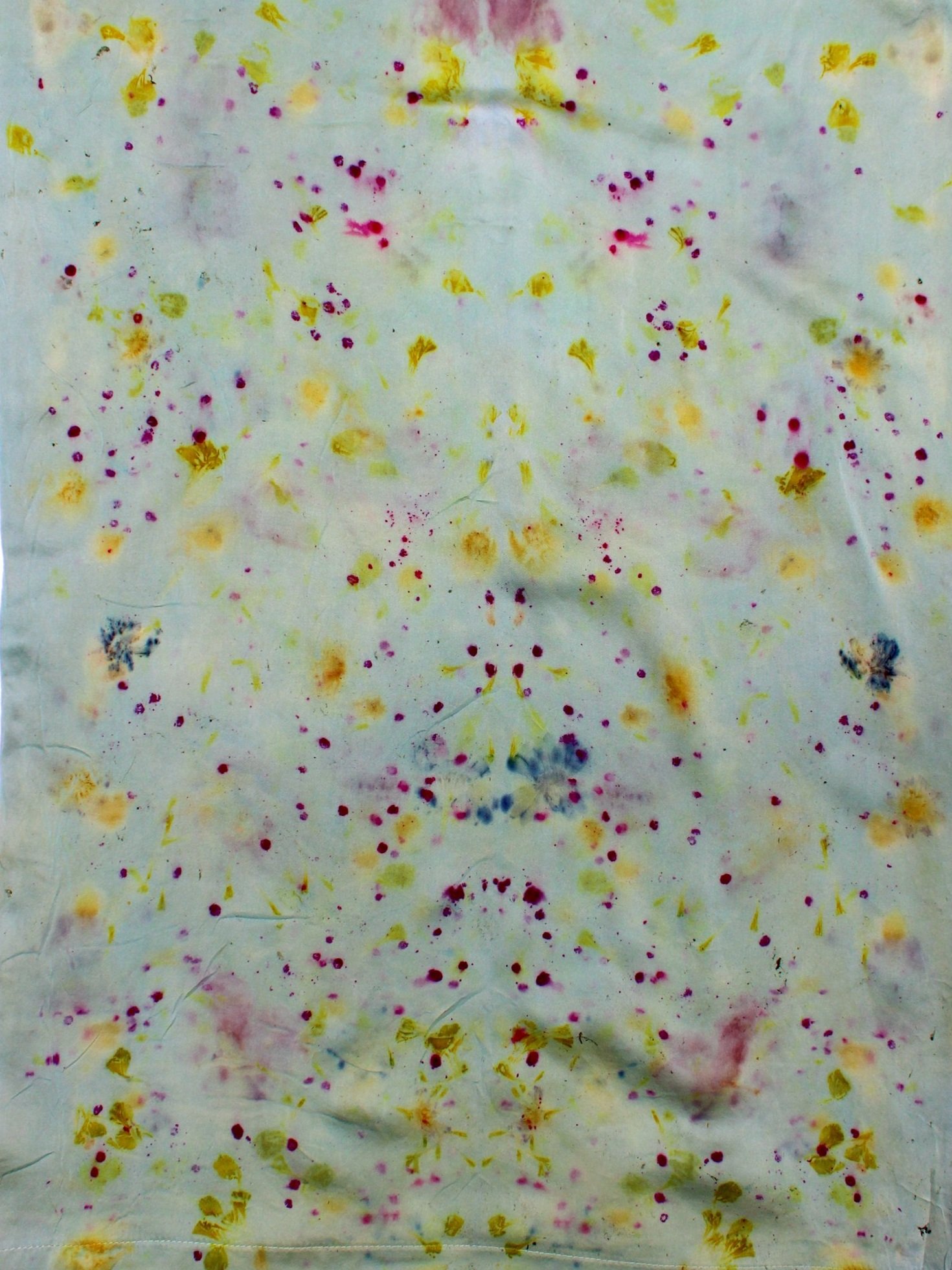
Alum mordant, indigo dye, bundle dye with dried flowers and cochineal bugs.
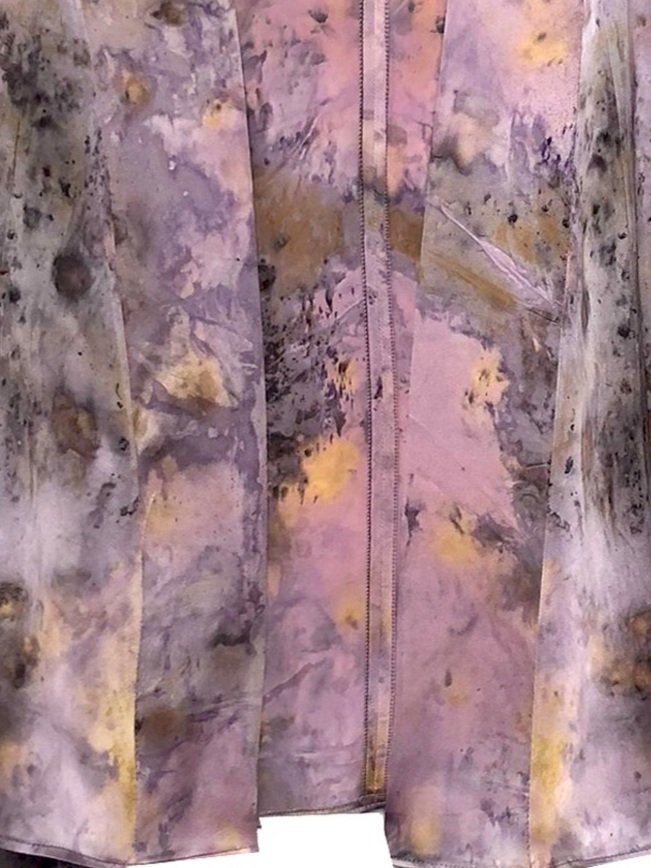
Alum mordant, logwood dye, bundle dye with natural dye extracts, iron powder.
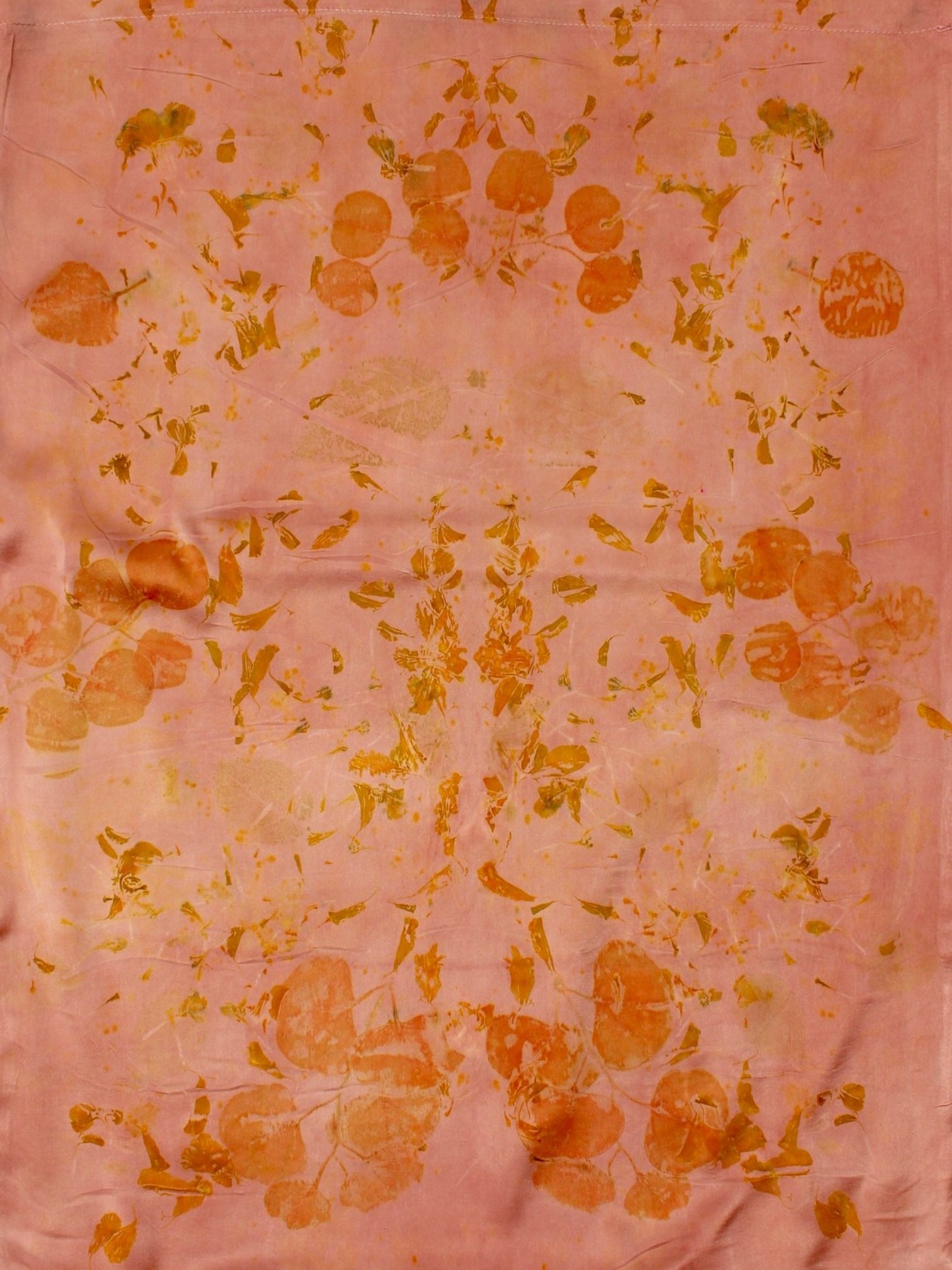
Alum mordant, madder root dye, bundle dye with fresh eucalyptus and marigold.
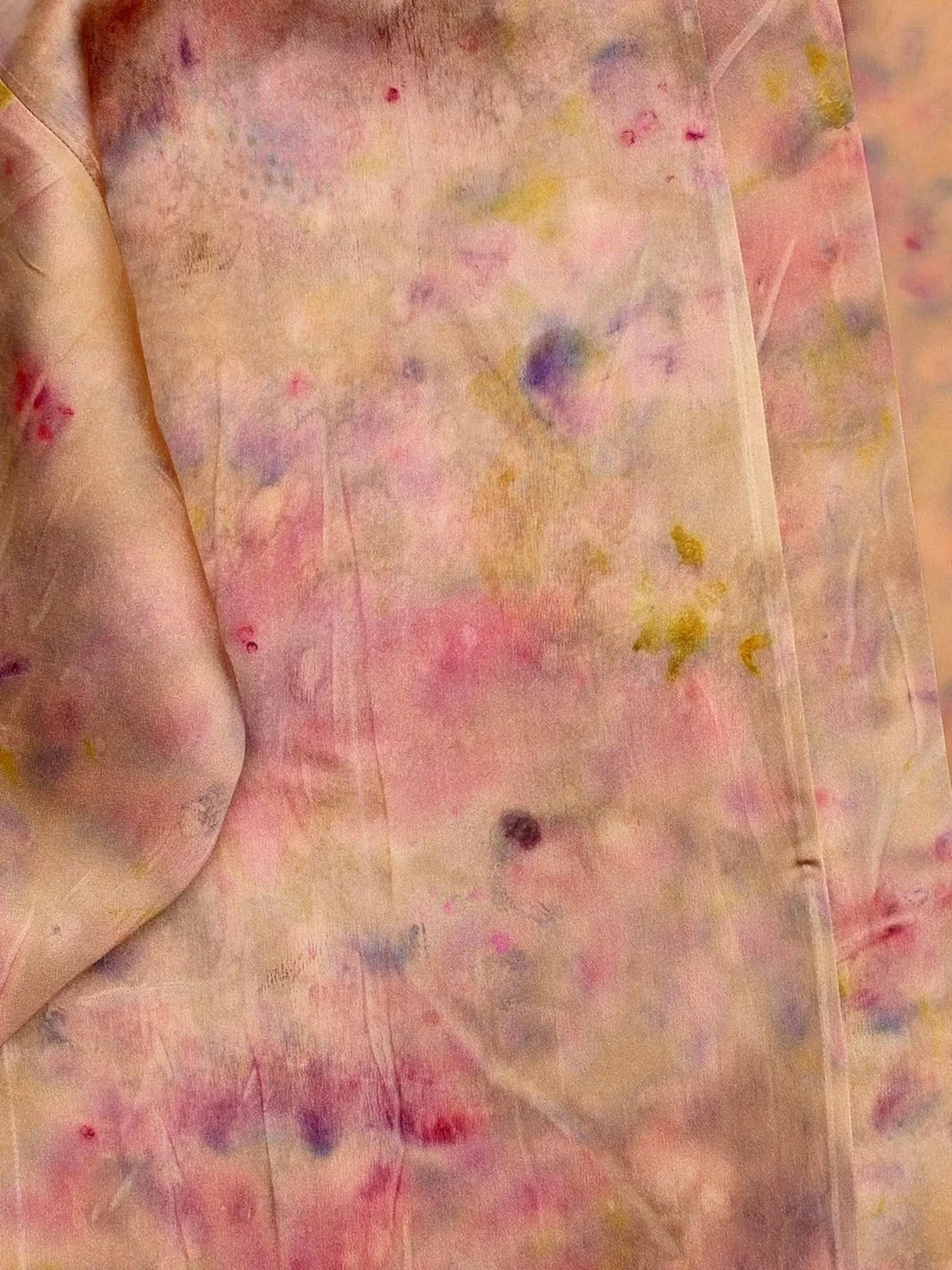
Alum mordant, tannin dye, bundle dye with dried flowers: roses, hibiscus.

The video recording outliNes how to
make this cochineal-dyed
silk charmeuse scarf
WATCH THE LIVE SESSION below:
This video covers:
Scouring, wetting out and mordanting fiber with three types of alum
How to weigh your fabric and use the WOF percentage system
How to prepare and work with a range of natural dyestuffs
How to Bundle Dye: Demo begins at the 44 min. mark
WATCH THE REVEAL
OF THE BUNDLE DYED SCARF
Material: 19.5mm. silk charmeuse scarf
Mordant: Aluminum Triformate
Dye: Cochineal, 5% WOF
Botanicals: Dried marigolds, roses, hibiscus, hollyhock, cochineal, onion skins, weld

RESOURCES
& Suppliers
FOR THE BUNDLE DYEING PROJECT, CHOOSE FROM
ANY OF THE FOLLOWING NATURAL FIBERS
PROTEIN— (animal fibers): Silk, silk blends, cashmere, wool and wool blends.
CELLULOSE— (plant fibers): Lightweight cotton, linen, hemp, ramie, bamboo, pina, viscose, rayon.
Working with remnants or vintage fabrics is great for practice— just make sure they contain no synthetic fibers. Dharma Trading has an affordable selection of natural fabrics— perfect for bundle dyeing.
I regularly use these fabrics from Dharma Trading:
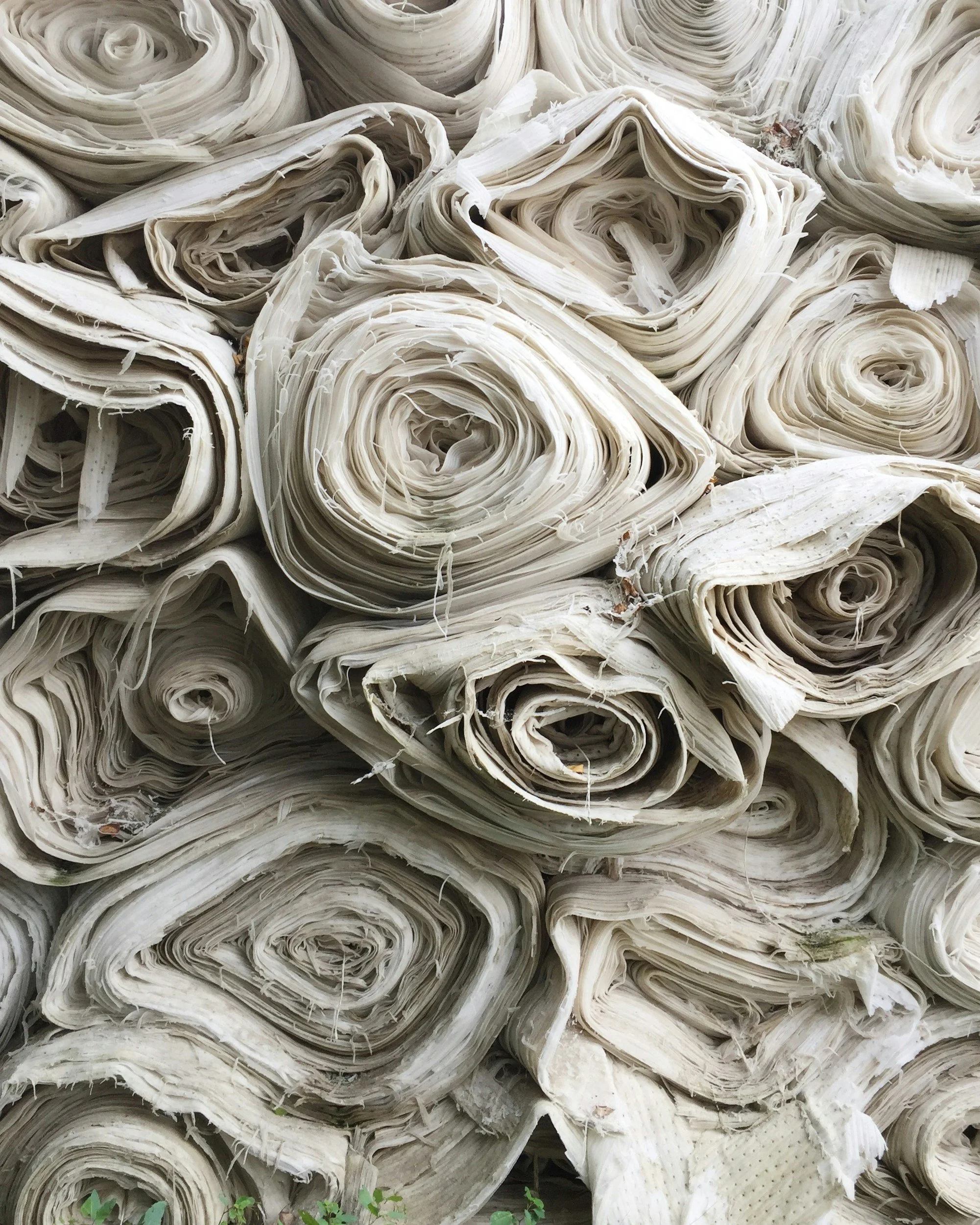
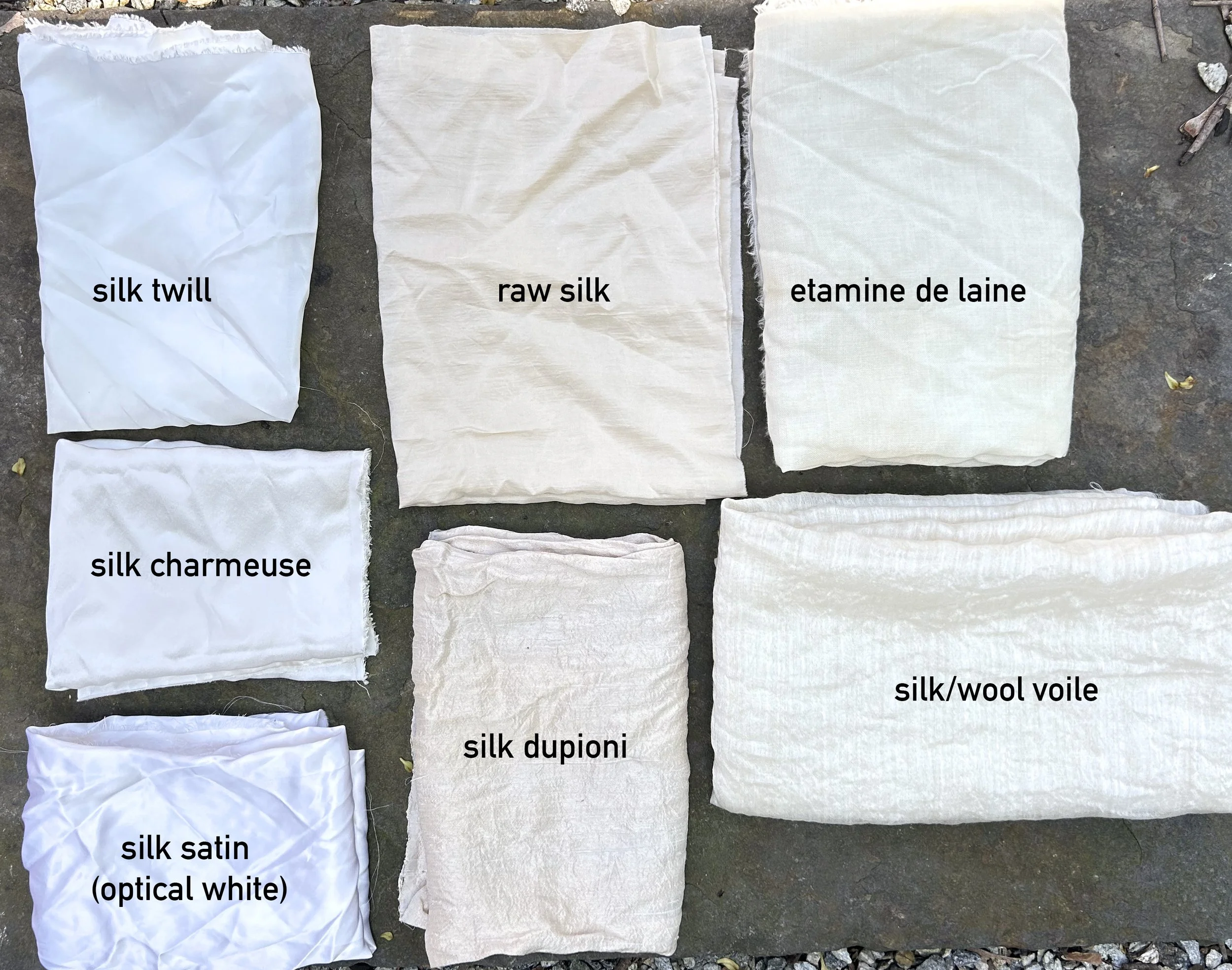
I have chosen an assortment of my personal favorite protein fibers to print with. With a history of garment construction, I am often choosing fibers that will wear nicely against the skin but that also have the capacity to absorb plant color. Silk and wool present a diverse range of textures, weights, and weaves. The coloring tends toward natural hues, avoiding optical white unless intentionally treated. Mordants can subtly influence the tint towards a pale champagne tone.
Silk twill: Silk Twill features a distinguished diagonal rib pattern and has high thread counts. So it's more durable and stout than regular silk fabrics.
Silk charmeuse: Charmeuse is a lightweight fabric woven with a satin weave. These float threads give the front of the fabric a smooth, shiny finish, whereas the back has a dull finish
Silk satin: Silk satin is a soft, smooth, and natural fabric made by weaving silk fibers using a satin weave. The satin weave has a 4:1 weft to warp thread ratio, which gives silk satin its famous glossy surface. Satin is one of the three major textile weaves, along with plain weave and twill. Satin is characterized by a soft, lustrous surface on one side, with a duller surface on the other.
Raw silk: Raw silk is unrefined silk that has been spun into yarn before any finishing process is done. It has a natural yellowish color and a coarser texture than refined silk.
Silk dupioni: Dupioni silk, or raw silk, is a plain weave fabric made with fine yarn in the warp and uneven yarn in the weft. The weft yarn is thicker and slightly irregular, while the warp yarn is very fine. This creates a tightly woven fabric with a lustrous surface and a crisp hand.
Etamine de laine (wool): Étamine de laine is a fabric made from merino wool that is ultra soft, warm, and light. It has a loose texture, is thicker than silk, and is made of denser fibers.
Silk/wool blend “voile”: Voile is a lightweight, semi-sheer fabric made from wool, silk, rayon, or cotton, constructed in a plain weave, and is usually transparent. It has a higher thread count than most cotton fabrics, which results in a silky soft hand.
My Favorite Silk & Wool for BOTANICAL PRINTING
NATURAL DYE & MORDANT INGREDIENTS LINKS
In the live session, I demonstrate how to mordant fabric using aluminum triformate or potassium aluminum sulfate to prepare it for solid-color dyeing. Click the links below to purchase these mordants.
MORDANTS—
Alum (PAS): Potassium aluminum sulfate, a metallic salt used to mordant both protein and cellulose fibers.
Aluminum TriFormate: Aluminum triformate is a cold process mordant used for both protein and cellulose fibers and makes for vibrant prints (it is hands-down my favorite alum). It is measured by a gpL (grams per liter) calculation or a weight of fiber (WOF) percentage.
NATURAL DYES—
Nearly any natural dye can be used for this project. If you're unsure where to begin, browse MAIWA's extensive range of natural dye materials for color inspiration. Once you've found a color you love, you can source it through purchase, cultivation, harvesting, or foraging.
BOTANICALS FOR BUNDLE DYEING—
Refer to page 140 in my book for materials, equipment and recommended dyestuffs for this alluring technique!
UNITED STATES /
Fabric, mordants, botanical dyes:
Dharma Trading Co. www.dharmatrading.com
Botanical Colors www.botanicalcolors.com
The Yarn Tree www.theyarntree.com
Organic Cotton Plus www.organiccottonplus.com
Picknatural www.picknatural.com
Aurora Silk www.aurorasilk.com
AUSTRALIA /
Fabric, mordants, botanical dyes, instruction:
Kraftcolour www.kraftkolour.net.au
Beautiful Silks www.beautifulsilks.com
CANADA /
Fabric, mordants, botanical dyes, instruction:
Maiwa www.maiwa.com
FRANCE /
Mordants, botanical dyes:
Green’ing www.green-ingredients.com
Couleur Garance www.couleur-garance.com/
NATURAL DYE SEEDS /
Grand Prismatic www.grandprismaticseed.com/
Strictly Medicinal Seeds www.strictlymedicinalseeds.com/
UNITED KINGDOM /
Mordants, botanical dyes, fabrics:
George Weil www.georgeweil.com
Wild Colours www.wildcolours.co.uk
Themazi www.themazi.com
ISREAL /
Fabric, mordants, botanical dyes, instruction:
Suzanne Dekel www.suzannedekel.com