The Ultimate Guide to Mordanting NATURAL FIBERS FOR Natural DyeING
Natural dye preparation begins long before the dye pot. This free guide introduces the essential techniques that form the foundation of all naturally dyed textiles. This post covers:
• Weight of Fiber (WOF) explained
• How to scour silk and cellulose fabrics
• Mordanting recipes for protein, cellulose & both: PAS, Aluminum acetate, Aluminum Triformate
• How to extract color from dye plants
Choosing the Right Fiber for Natural Dyeing— What fabrics work best for natural dyeing?
Natural fibers such as cotton, linen, hemp, wool, and silk generally produce the best results. Synthetic fibers typically do not absorb natural dyes well.
Protein Fibers
Silk
Wool
Cellulose Fibers
Cotton
Linen
Hemp
Viscose (manmade fiber, derived from plants)
Rayon (manmade fiber, derived from plants)
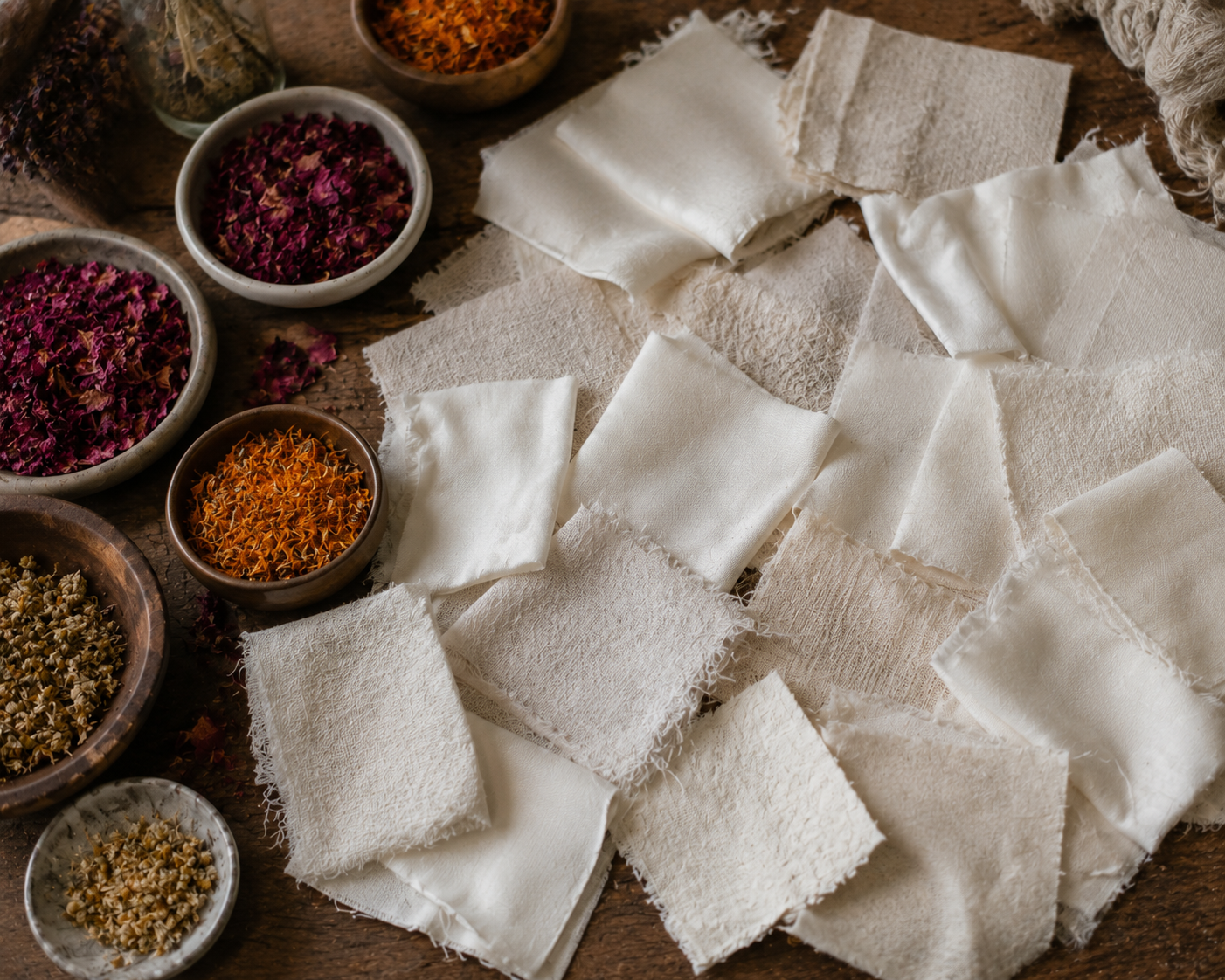
There’s something thrilling about a pile of natural fabrics ready for dyeing and printing, its like a blank canvas awaiting your brushstrokes…
ALWAYS WEIGH YOUR FABRIC DRY PRIOR TO BEGINNING THE PREPARATION PROCESS:
Weight of Fiber (WOF) is the dry weight of the fabric or fiber being dyed. In natural dyeing, dye materials and mordants are often measured as a percentage of the WOF to ensure consistent and repeatable results. Use a digital scale that measures in grams.
For example, if you have 100g of silk and a recipe calls for 15% WOF alum, you would use 15g of alum.
Wetting Out The Fiber
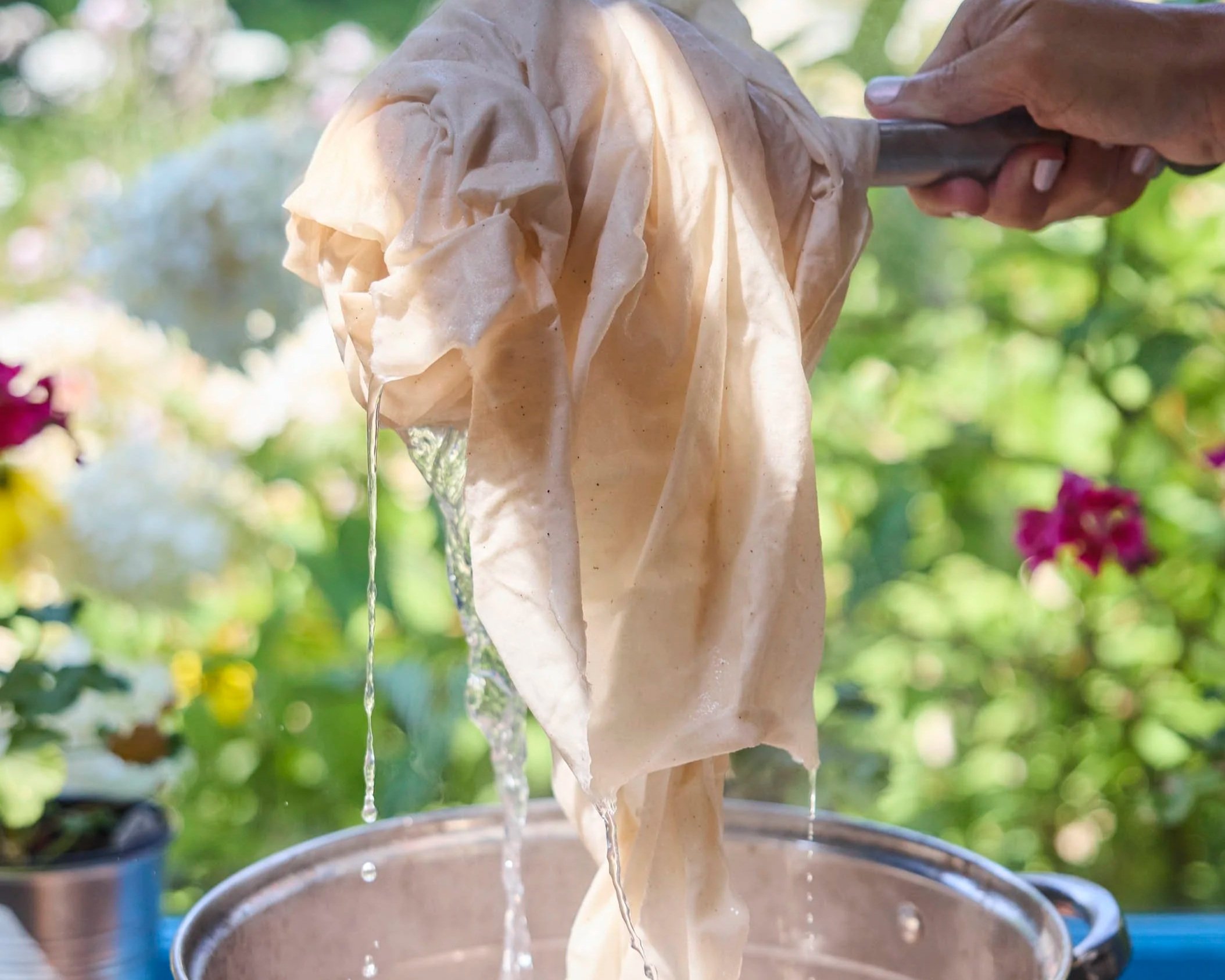
Wetting out the fiber allows for the fabric to become fully saturated before scouring and mordanting.
Wetting Out The Fiber
Fill a basin or pot with warm water.
Add a squirt of plant-based soap and stir.
Submerge the fiber and gently agitate to ensure it is fully saturated.
Soak for 30-60 minutes.
Rinse thoroughly in clean water.
The fiber is now evenly wetted, and ready for scouring.
Scouring CELLULOSE FIBERS
Fill a non-reactive pot with enough water for the fabric to move freely.
Add Liquid Scour, Orvus paste soap, Synthrapol or Neutral Detergent at 5.5% WOF (approximately 5.5g or 1 tsp per 100g fabric).
Add Soda Ash (Sodium Carbonate) at 1–2% WOF (approximately 1–2g or ¼–½ tsp per 100g fabric).
Add the pre-wetted fabric and stir well.
Heat to a gentle simmer (180–200°F / 82–93°C) and maintain for 60 minutes, stirring occasionally.
Allow to cool, then rinse thoroughly until the water runs clear.
The fabric is now clean and ready for mordanting or dyeing.
A Note on Scouring Silk and Wool
Many silk fabrics are sold as PFD (Prepared for Dyeing), meaning they have already been thoroughly cleaned and processed to accept dye. If your silk is labeled PFD, additional scouring is often unnecessary.
In fact, I frequently skip scouring silk altogether, especially when working with high-quality silk yardage or scarves intended for botanical printing and natural dyeing. Excessive washing can gradually diminish the fiber's natural luster and softness, so I prefer to handle silk as gently as possible.
The same philosophy applies to wool. While a light scour may be beneficial for particularly dirty or heavily processed wool, repeated scouring can strip away some of the fiber's natural character. For clean, untreated wool, I often move directly to mordanting and dyeing rather than subjecting the fiber to additional washing.
What You'll Need
Silk or wool fabric or yarn
A non-pH-neutral detergent formulated for delicate fibers, such as Synthrapol or a mild textile soap
Large non-reactive pot or basin
Warm water
Spoon or tongs for gentle stirring
Scouring Silk
Fill a non-reactive pot or basin with warm water (approximately 100–120°F / 38–49°C).
Add a small amount of mild detergent and stir to dissolve.
Submerge the silk and gently move it through the water.
Allow it to soak for 30–60 minutes.
Avoid vigorous stirring, wringing, or sudden temperature changes, which can damage delicate silk fibers.
Rinse thoroughly in water of a similar temperature until the water runs clear.
Gently squeeze out excess water and allow to air dry or proceed directly to mordanting.
Scouring Wool
Fill a pot or basin with warm water (approximately 100–120°F / 38–49°C).
Add a small amount of olive oil soap or a very mild detergent suitable for protein fibers.
Carefully submerge the wool, ensuring it is completely saturated.
Allow it to soak for 30–60 minutes.
Avoid agitation, rubbing, or rapid temperature changes, as these can cause felting.
Drain the water and rinse gently using water at a similar temperature.
Repeat if necessary until the rinse water is clear.
What is a mordant?
A mordant is a substance used to help natural dyes bind to fiber, improving color depth and wash fastness.
PAS (Potassium Aluminum Sulfate) Mordant— Protein & Cellulose
Weigh your dry silk (example: 100g).
Calculate 15% WOF PAS: 15g PAS.
Dissolve the PAS in warm water in a small vessel. Stir until fully dissolved.
Add the solution to a non-reactive pot with enough water for the silk to move freely.
Add the pre-wetted— or scoured— fiber.
Slowly heat at a low setting to 180°F (82°C) and maintain for 1 hour.
Allow the fiber to cool in the mordant bath.
Rinse then proceed directly to dyeing or allow to dry fully.
Aluminum Triformate Mordant— Protein & Cellulose
Weigh your dry fabric.
Calculate 5-10% Aluminum Triformate (ATF) WOF (5g-10g ATF per 100g fabric).
Dissolve the ATF in warm (not hot) water and add to a non-reactive container with enough water for the fabric to move freely.
Add pre-scoured, wet fiber and stir well.
Soak at room temperature for 8–24 hours, stirring occasionally.
Remove the fabric and allow it to dry completely.
Cure for at least 24 hours before dyeing or printing.
Recipe: Per 100g cotton, use 5g-10g Aluminum Triformate. The fabric is ready for natural dyeing once dry and cured.
Aluminum Acetate Mordant— Cellulose only
Weigh your dry fabric.
Calculate 5-10% Aluminum Acetate WOF (5g-10g aluminum acetate per 100g fabric).
Dissolve the aluminum acetate in hot tap water and add to a non-reactive container with enough water for the fabric to move freely.
Add pre-scoured, wet cellulose fibers (cotton, linen, hemp, etc.).
Rotate goods occasionally and allow to soak for 2 hours to overnight.
Remove the fabric and gently squeeze out excess liquid.
Allow the fabric to dry completely.
Cure for 24 hours before dyeing or eco-printing.
9: Fixing Cellulose Fibers in Calcium Carbonate
Calculate 5% Calcium Carbonate WOF (5g calcium carbonate per 100g fiber), or approximately 1 rounded teaspoon per 100g fiber.
Dissolve the calcium carbonate in warm water and add enough water for the fabric to move freely.
Add the mordanted fabric and soak for 15–30 minutes, stirring occasionally.
Remove the fabric and rinse lightly if desired.
Allow the fabric to dry before dyeing or eco-printing.
Recipe: Per 100g fiber, use 5g calcium carbonate (approximately 1 rounded teaspoon). This fixing step helps prepare aluminum acetate–mordanted cellulose fibers for natural dyeing and eco-printing.
Preparing a Dye Bath
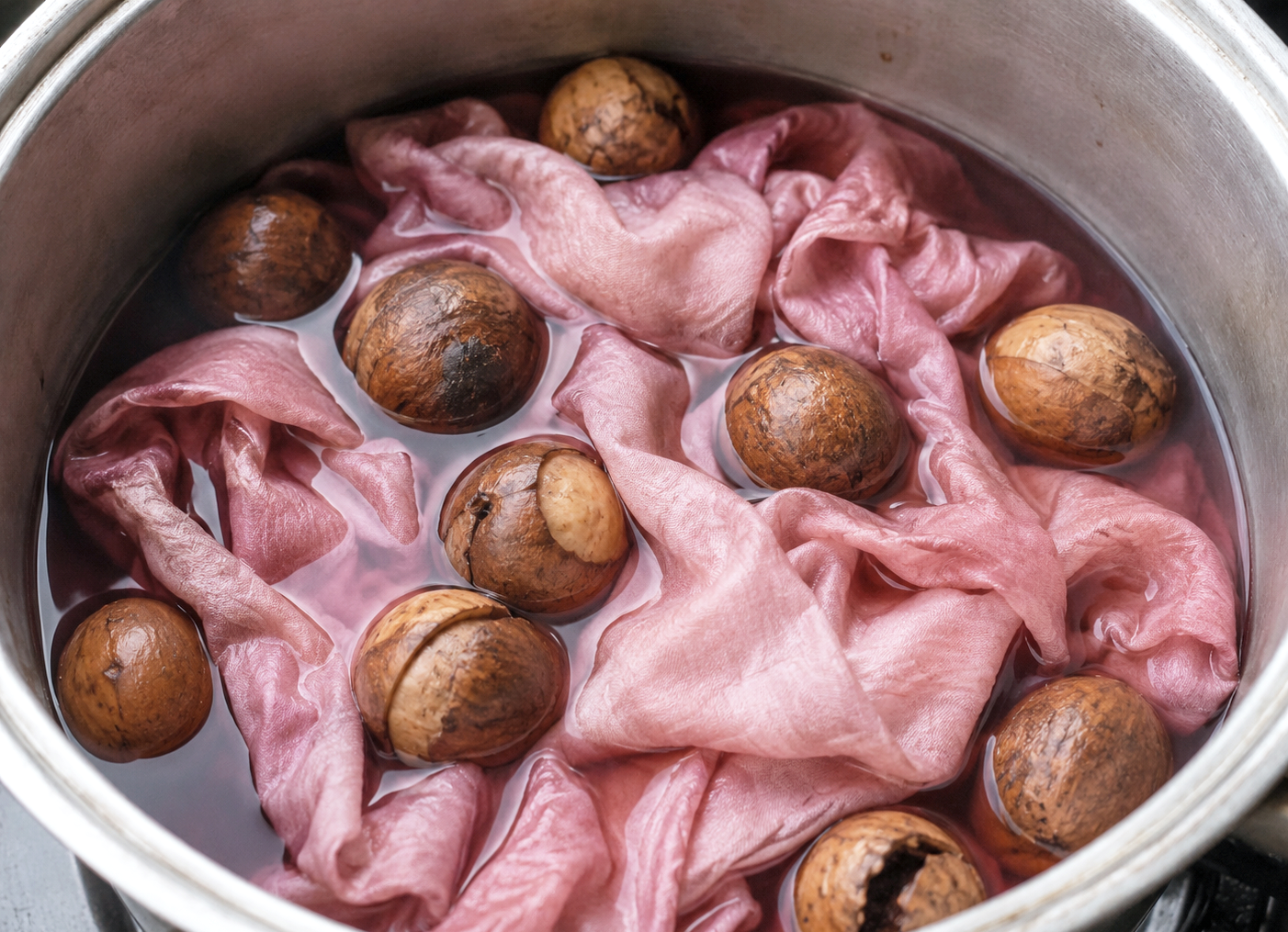
Natural dyes are typically measured as a percentage of the Weight of Fiber (WOF). The amount of dyestuff needed varies depending on the plant material and its concentration. Always follow the manufacturers recommendations on how much percentage of dye to use per WOF.
As a general guideline:
Raw dyestuffs (such as dried flowers, leaves, bark, roots, and wood chips) are often used at 100% WOF. For example, 100g of fiber would require 100g of dyestuff. There are some exceptions such as onion skins which are very light in weight— start with 1 cup and see how concentrated it gets. Then there are avocado pits which are very heavy— start with 3-5 and see what color you get.
Powdered dyestuffs are more concentrated and are typically used at lower percentages, often between 25–50% WOF.
Extracts are highly concentrated and usually require only 1–10% WOF.
Cochineal is exceptionally strong and is commonly used at 2–6% WOF, rather than 100%.
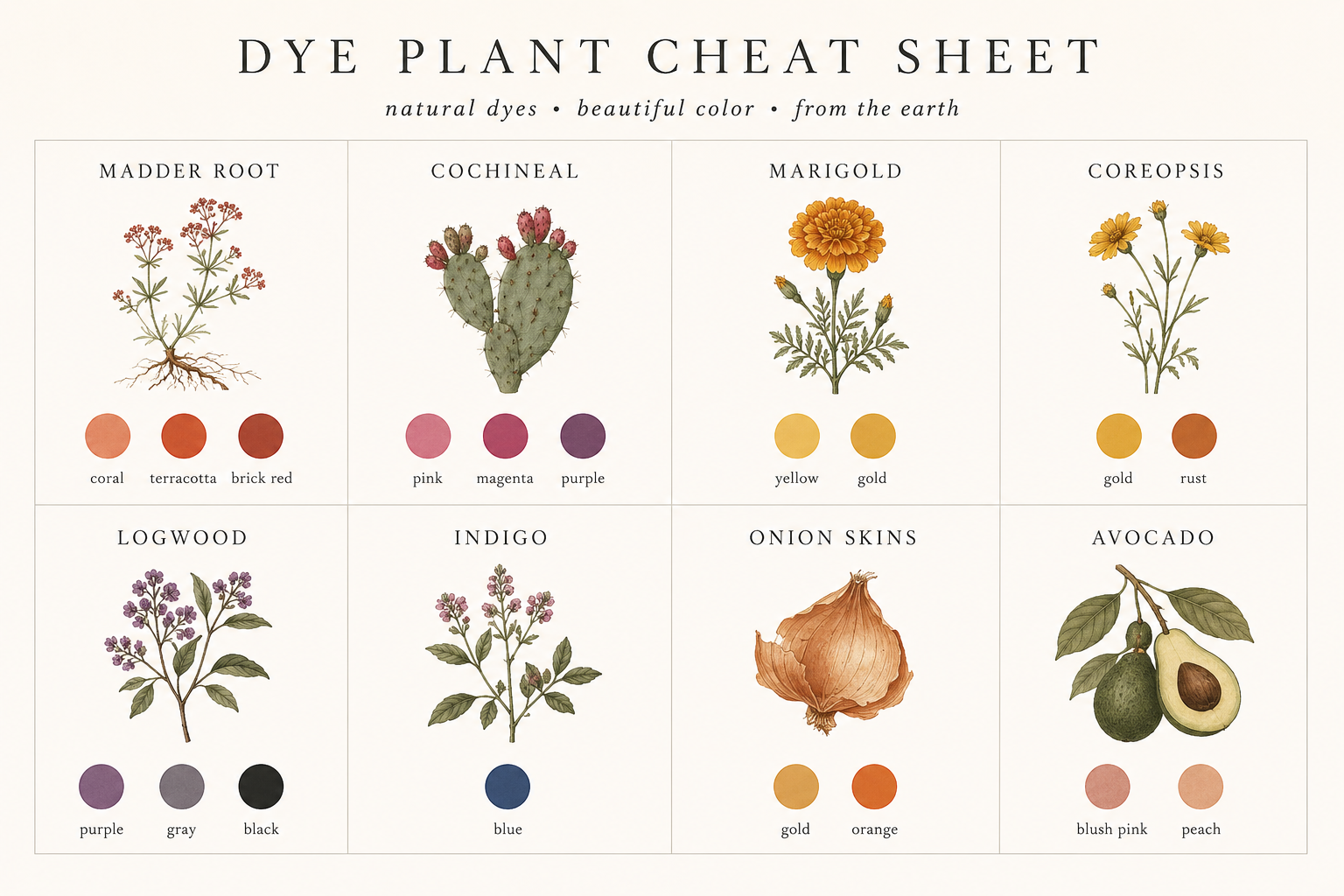
To prepare the dye bath:
Weigh the dyestuff according to the desired percentage of WOF.
Place the dyestuff is a small vessel and pour very hot water to saturate it. Stir.
Add the wet dyestuff to a pot of water (using enough volume to allow the dye to cook) and simmer gently for 30–60 minutes to extract the color.
Strain out the plant material (if necessary) into a separate vessel— this liquid is now your dye bath.
Add dye bath back into dye pot and add enough water to allow the fabric to move freely in the dye bath.
Add the mordanted fiber and process fabric for 1 hour at a very low heat.
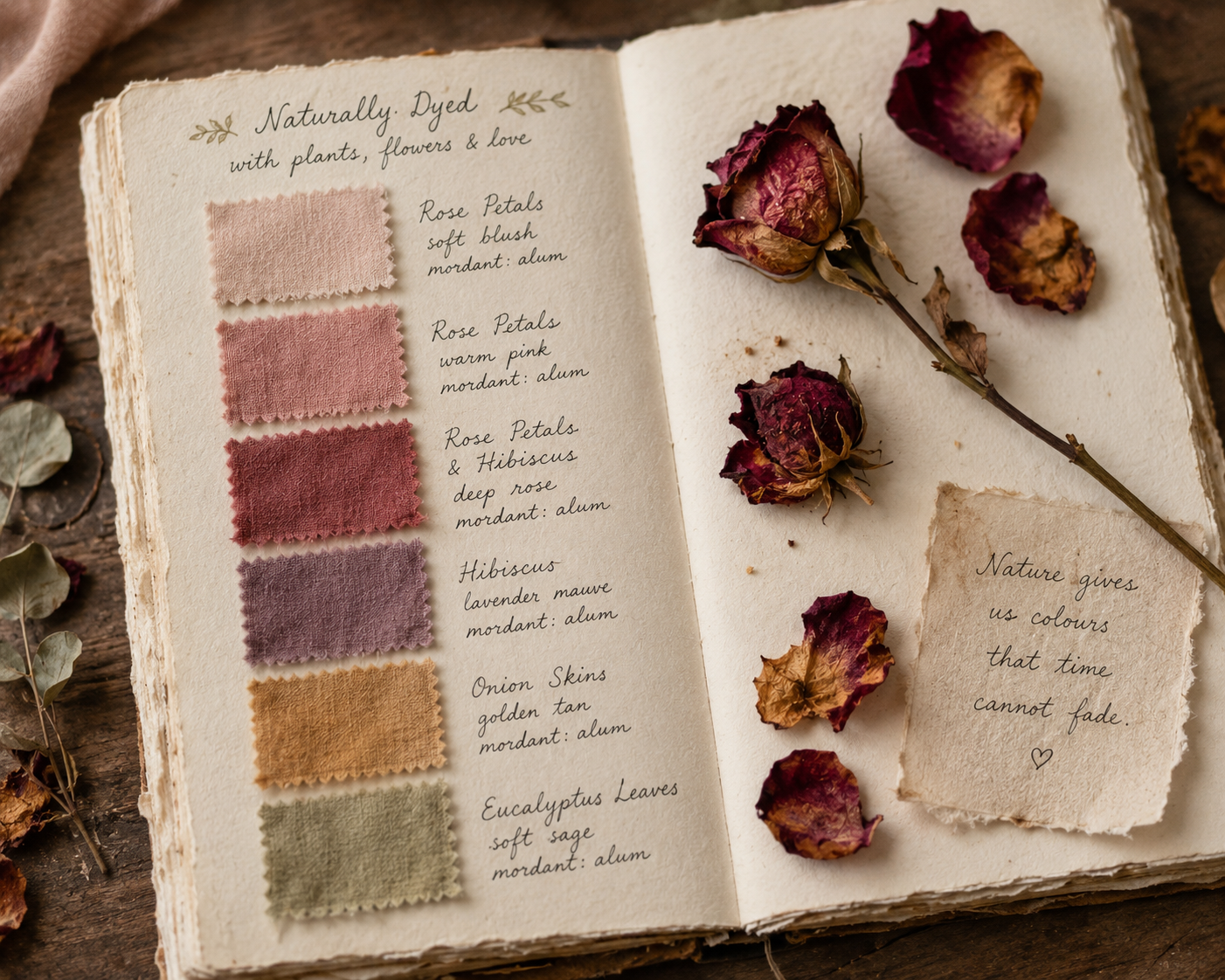
Always record your WOF percentages and results for future reference and repeatability.
Continue Your Botanical Journey
If you've enjoyed this guide, I invite you to continue exploring the world of natural color inside the Flora Obscura Atelier or browse my workshops and projects to make yourself at home. Also, if you havn’t checked out my book, Printing from the Garden, you should!
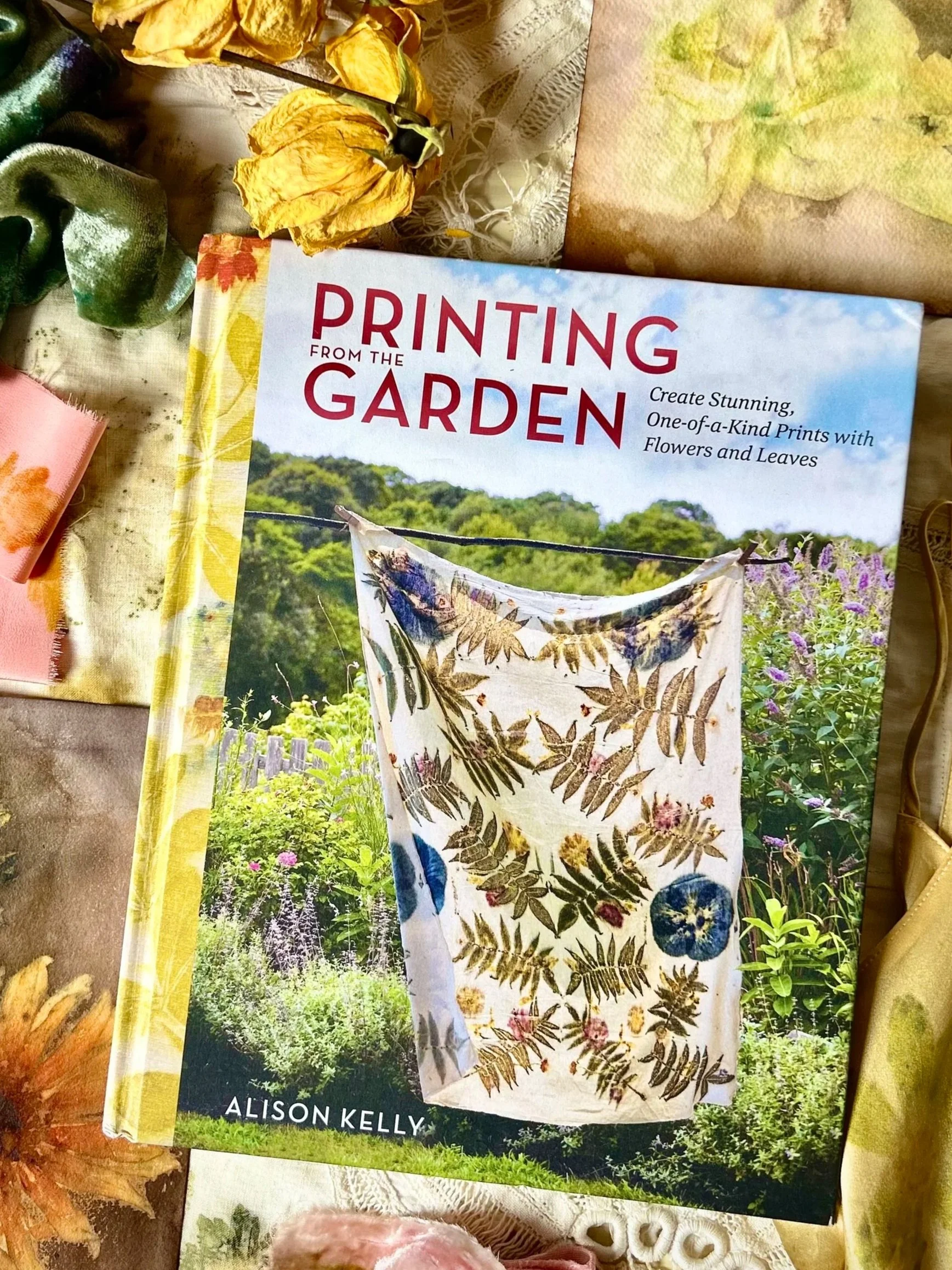
Order a signed copy of Printing from the Garden, my comprehensive botanical printing book and natural dyeing guide.
Books ordered now will ship June 8th— thank you for your patience. This beautifully illustrated eco printing book teaches how to create one-of-a-kind prints using flowers and leaves, featuring step-by-step instruction and a compendium of 30 plants documenting their stunning effects on fabric and paper.
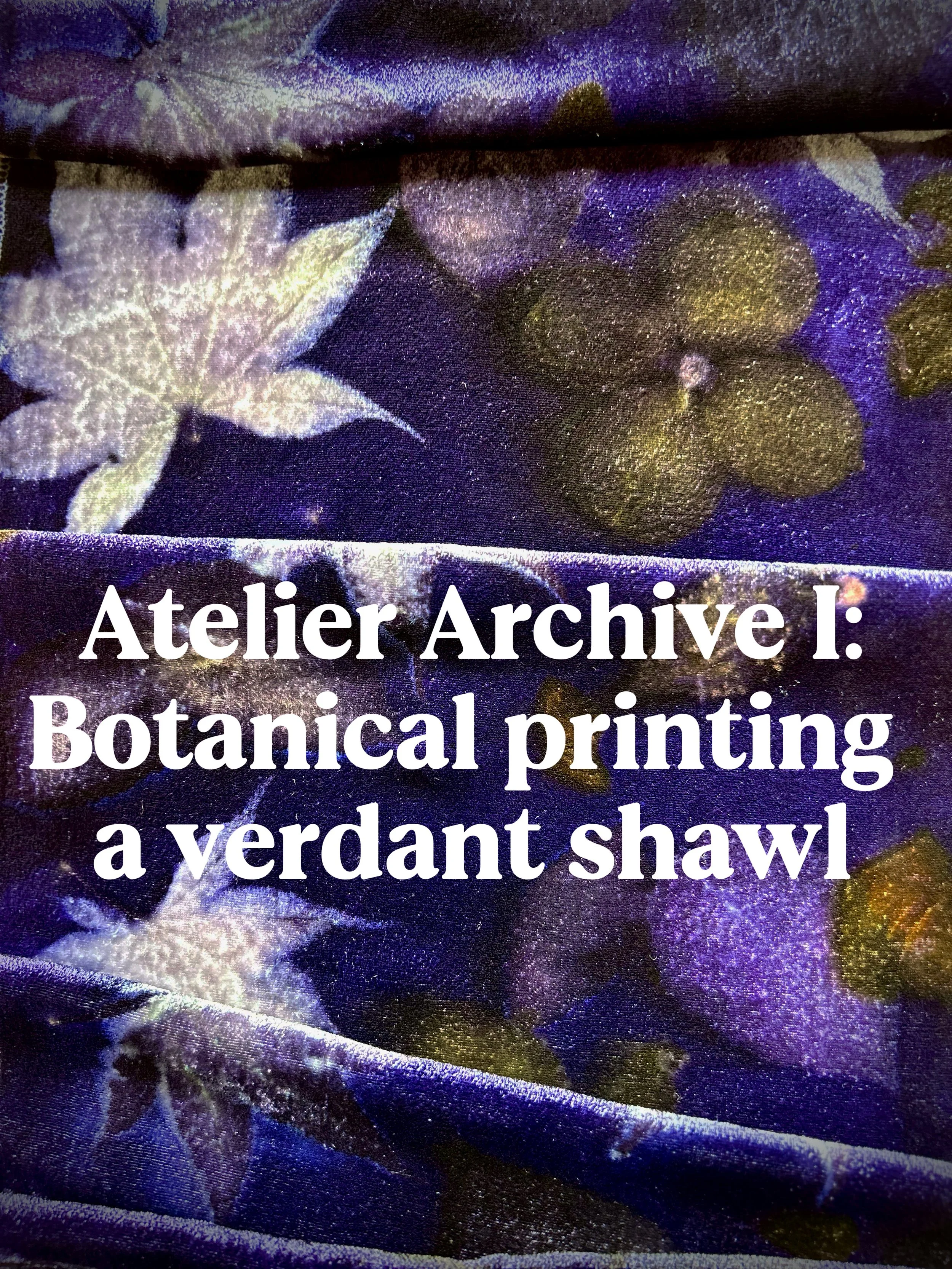
Atelier Archive I: The Woodland Shawl— A dark botanical silk velvet study.
In this workshop, you'll learn how to combine ecoprinting and natural dye techniques to create a dramatic textile infused with the beauty of fresh leaves and flowers. You’ll capture the delicate verdant impressions in sumptuous silk velvet, while a dark logwood carrier blanket provides depth, contrast, and atmosphere.
No sewing is required. Simply arrive with a length of fabric and a curiosity for the natural world.
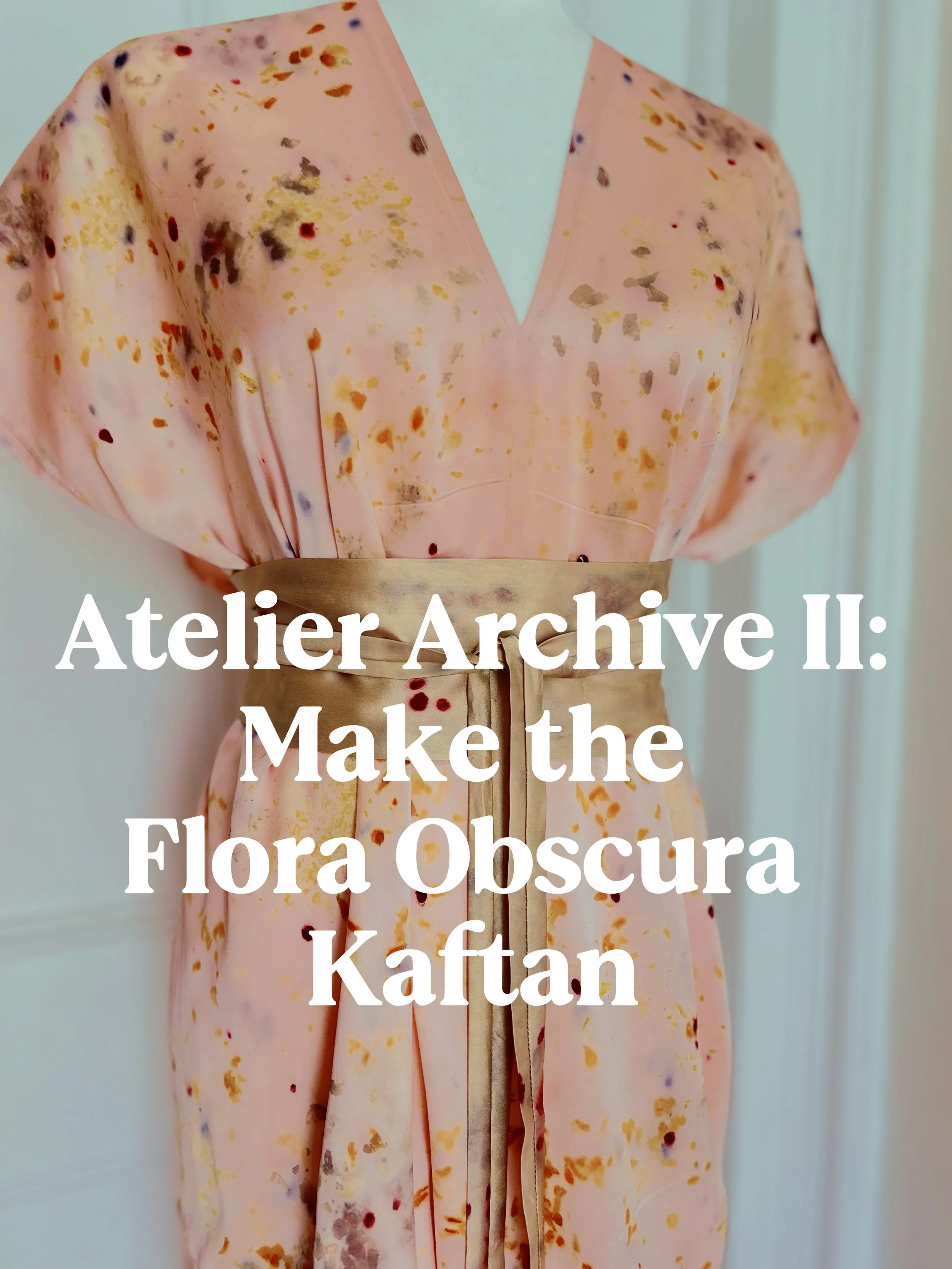
Say hello to my first sewing pattern! The Flora Obscura Kaftan: Edition One is a paperless sewing pattern that transforms simple lengths of fabric into an elegant, wearable silhouette. Designed with simplicity in mind, this project requires only straight cuts and straight seams, making it an approachable introduction to garment sewing.
Custom Sizing— The Flora Obscura Kaftan is drafted directly from your own measurements using a simple formula. Rather than conforming to standard sizing, each piece is shaped around your unique proportions, resulting in a garment that feels effortless, comfortable, and distinctly your own.
Low-to-No-Waste Construction— This is a patternless sewing project designed to honor both fabric and maker. No paper patterns are required—nothing to print, tape, or cut out before you begin. The cutting layouts are designed maximize fabric usage and minimize waste.
FAQs
Do I need to scour fabric before natural dyeing?
Yes. Scouring removes oils, waxes, dirt, and manufacturing residues that can prevent dyes from bonding evenly to fabric. If the fabric is labeled “PFD” or “prepared for dyeing”, scouring is not necessary. I most often skip the scouring process for silk and simply “wet out the fiber” prior to mordanting.
What fabrics work best for natural dyeing?
Natural fibers such as cotton, linen, hemp, wool, and silk generally produce the best results. Synthetic fibers typically do not absorb natural dyes well.
What is a mordant?
A mordant is a substance used to help natural dyes bind to fiber, improving color depth and wash fastness.
Can I natural dye fabric without a mordant?
Some dyes, known as substantive dyes, can color fabric without a mordant. Examples include cochineal, safflower, oak galls, avocado pits, walnut leaves, and onion skins, though results vary by fiber and dye source.